DSA Course Overview

Our DSA course is the best in the industry, making novices into confident problem-solvers ready for top tech company interviews. We have a complete DSA course that encompasses all the basic data structures to the most advanced algorithmic algorithms such as arrays, linked lists, stacks, queues, trees, graphs, heaps, hashing, dynamic programming, greedy algorithms, backtracking, recursion, bit manipulation etc.

The recent industry data revealed over 80% of the candidates fail their technical interviews because of the absence of formal problem-solving skills, and therefore DSA mastery is absolutely essential to achieve career success. We fill this gap with practical coding challenges in the form of simple array manipulation to challenging system design problems and complicated graph algorithms.

Whether you’re preparing for FAANG interviews, aiming for product-based companies, or building competitive programming skills, our training makes you have knowledge full of search algorithms, sorting methods, tree walks, graph walks, string algorithms, mathematical algorithms, and a myriad of other vital concepts.

Complete within 4 months (on weekdays), 6 months (weekends) or in our fast-track 45-day course. Each batch will consist of live coding workshops, mock interviews, and one-on-one mentorship.

Why Choose Gyansetu’s DSA Course?

Our distinctiveness is being the top destination to the mastery of DSA, where we provide holistic training with expert teaching, rich practice, place, and career change, unlike just learning algorithms.

  1. Complete Curriculum: Learn arrays, trees, graphs, dynamic programming, greedy algorithms, backtracking, recursion, bit manipulation and infinite patterns of problem solving questions.
  2. 500+ Practice Problems: Solve large coding problems using arrays, tree algorithms, graph algorithms, and string processing, dynamic programming patterns, and more with complete explanations and solutions optimized.
  3. Professional Instructors: Get taught by experience and knowledge of professionals who have worked at leading technology organizations (Google, Amazon, Microsoft, and others) and who have over 10 years of interview experience with them.
  4. Flexible Learning: Complete your DSA training in 3 months on weekdays, 4 months on weekends or only 45 days with our fast-track option which covers the same full-course of training.
  5. Live Coding Sessions: Live the interactive classes, in which educators solve complex problems in real-time, including arrays, graphs, dynamic programming, system design, and advanced topics.
  6. One-to-One Mentorship: You will be given one-on-one guidance to resolve your doubts, career guidance, preparement to interview, create a resume, and personalized learning tracks based on your aspirations and level of skill.
  7. Mock Interview Practice: Simulations of interviews with coding tests, behavioral sessions, system-design conversations, plus comprehensive feedback pre-train job interviews in the highest-ranked companies.
  8. Placement Support: Enjoy job referrals, resume optimization, LinkedIn profile optimization, salary negotiation advice and exclusive assistance to find a job in product-based firms.
  9. Industry-Approved Certification: Get a highly desired certificate that proves you know data structures, algorithms, problem-solving, and interview preparation and enhances your profile on all technology platforms.
  10. Lifetime Access: Have permanent access to course content, recorded sessions, practice problems, updated course content, community support and all future improvements in the curriculum at no extra cost.

dsa-course

Key Highlights

100% Placement Support
Free Course Repeat Till You Get Job
Mock Interview Sessions
1:1 Doubt Clearing Sessions
Flexible Schedules
Real-time Industry Projects

Placement Stats

stats
Maximum salary hike
150%
Average salary hike
65%

Our Alumni in Top Companies

Placement Highlights

Ankit
100 % Hike
MCA
Fresher
Associate Consultant
Ernst & Young
Shivani Choudhary
100 % Hike
Research Analyst
IIT Delhi
Business Analyst
Pramerica Life Insurance

Batches Timing for Data Analytics Certification

Track Weekdays (Tue-Fri) Weekends (Sat-Sun) Fast Track
Course Duration 3 Months 4 Months 30 Days
Hours Per Day 2-3 Hours 3-4 Hours 6 Hours
Training Mode Classroom/Online Classroom/Online Classroom/Online

DSA Certification Course

In the current competitive world of technology, the recognized DSA certification in our industry makes your knowledge credible and helps tremendously improve your credibility. Post your certificate on LinkedIn, Resume, Portfolio and Social Media so that recruiters and employers around the world can view your skills. Here are the key benefits: 

  • Industry Recognition: Google, Amazon, Microsoft and startups are all the top tech companies that have highly valued our certification, and it is a sign that you are ready to work in complex technical positions.
  • Verified Authenticity: In every certificate, you would have unique verification credentials and this will enable the employers to verify your success and have confidence in the abilities that you have demonstrated.
  • Career Impact: Certified candidates indicate a 40-60 percent increase in the interview call back rates and place scores in product-based firms and competitive technical roles.

Course Curriculum

DSA course is designed for beginners and intermediate learners who are looking to build strong problem-solving skills for coding interviews and competitive programming. You will be trained on topics like arrays, linked lists, trees, graphs, sorting, searching, etc. with real time industry problems.

Complexity Analysis 6 Topics
  • Introduction to Asymptotic Analysis and Big O Notation
  • Order complexity analysis
  • Theoretical complexity analysis
  • Time complexity analysis of searching and sorting
  • Theoretical space complexity
  • Space complexity analysis of recursive algorithms
Arrays 39 Topics
  • Introduction to Arrays
  • How arrays are stored in memory?
  • Passing arrays to functions
  • Multidimensional arrays
  • Two Pointers
  • Find Maximum in Sliding Window
  • Search a Rotated Array
  • Find the Smallest Common Number
  • Rotate an Array by N Elements
  • Find Low/High Index of a Key in a Sorted Array
  • Move All Zeros to the Beginning of the Array
  • Stock Buy Sell to Maximize Profit
  • Merge an Array With Overlapping Intervals
  • Find Pair With Given Sum in an Array
  • Sort an Array Using Quicksort Algorithm
  • Cyclic Sort (easy)
  • Find the Missing Number (easy)
  • Maximum Sum Subarray of Size K (easy)
  • Smallest Subarray With a Greater Sum (easy)
  • Squaring a Sorted Array (easy)
  • Subsets With Duplicates (easy)
  • Bitonic Array Maximum (easy)
  • Permutations (medium)
  • Triplet Sum to Zero (medium)
  • Triplet Sum Close to Target (medium)
  • Triplets with Smaller Sum (medium)
  • Subarrays with Product Less than a Target (medium)
  • Dutch National Flag Problem (medium)
  • Merge Intervals (medium)
  • Insert Interval (medium)
  • Intervals Intersection (medium)
  • Conflicting Appointments (medium)
  • Ceiling of a Number (medium)
  • Next Letter (medium)
  • Number Range (medium)
  • Search in a Sorted Infinite Array (medium)
  • Minimum Difference Element (medium)
  • Solve N-Queens Problem
  • Find K-Sum Subsets
Strings 25 Topics
  • Introduction to strings
  • How strings are stored in memory?
  • Reverse Words in a Sentence
  • Remove Duplicates from a String
  • Remove White Spaces from a String
  • Word Break Problem
  • XML to Tree
  • Find all Palindrome Substrings
  • Regular Expression Matching in String
  • Longest Palindromic Subsequence
  • Longest Palindromic Substring
  • Count of Palindromic Substrings
  • Minimum Deletions in a String to make it a Palindrome
  • Longest Common Substring
  • Longest Common Subsequence
  • Minimum Deletions & Insertions to Transform a String into another
  • Fruits into Baskets (medium)
  • Longest Substring with maximum K Distinct Characters (medium)
  • String Permutations by changing case (medium)
  • Balanced Parentheses (hard)
  • Unique Generalized Abbreviations (hard)
  • Longest Substring with Distinct Characters (hard)
  • Longest Substring with Same Letters after Replacement (hard)
  • Boggle
  • Generate all Combinations of Balanced Parentheses
  • Singly Linked Lists (SLL)
  • Basic Linked List Operations
  • Circular Linked List
  • Doubly Linked List (DLL)
  • Reverse a Singly Linked List
  • Remove Duplicates from a Linked List
  • Delete All Occurrences of a Given Key in a Linked List
  • Sort Linked List Using Insertion Sort
  • LinkedList Cycle (easy)
  • Start of LinkedList Cycle (medium)
  • Happy Number (medium)
  • Middle of the LinkedList (easy)
  • Intersection Point of Two Lists
  • Find n’th Node from the End of a Linked List
  • Swap Nth Node with Head
  • Merge Two Sorted Linked Lists
  • Sort a Linked List Using Merge Sort
  • Reverse Even Nodes in a Linked List
  • Rotate a Linked ListReverse Alternate K Nodes in a Singly  Linked List
  • Add Two Integers Represented by Linked Lists
  • Copy Linked List with Arbitrary Pointer
  • Reverse a Sub-list (medium)
  • Reverse every K-element Sub-list (medium)
  • Merge K Sorted Lists (medium)
  • Kth Smallest Number in M Sorted Lists (Medium)
  • Stack (Implementation)
  • Queue (Implementation)
  • Reversing First k Elements of Queue
  • Implement Stack Using Queues
  • Implement Queue Using Stacks
  • Evaluate Arithmetic Expressions
  • Merge Intervals
  • Longest Valid Parentheses
  • Largest rectangle in histogram
  • Minimum remove to make a valid parentheses
  • Remove duplicate letters
  • Remove k digits
  • Add two numbers
  • Decode string
  • Linear Search
  • Binary Search
  • Hash table
  • Interpolation Search
  • Bubble sort
  • Insertion sort
  • Heap sort
  • Selection sort
  • Merge sort
  • Quick sort
  • Sheel/Radix sort
  • An Introduction to Trees and Basic Tree Properties!
  • What is a Binary Tree?
  • Binary Search Trees
  • N-ary Trees
  • Segment Trees (Segment Interval)
  • Spanning Tree
  • AVL Trees
  • Check if Two Binary Trees are Identical
  • Write an In-Order Iterator for a Binary Tree
  • Iterative In-order Traversal of Binary Tree
  • In-order Successor of Binary Search Tree
  • In-order Successor Binary Search Tree With Parent Pointers
  • Level Order Traversal of Binary Tree
  • Reverse Level Order Traversal (easy)
  • Level Averages in a Binary Tree (easy)
  • Level Order Successor (easy)
  • Zigzag Traversal (medium)
  • Connect Level Order Siblings (medium)
  • Is a Binary Search Tree Valid?
  • Convert Binary Tree to Doubly Linked List
  • Print Tree Perimeter
  • Connect All Siblings of a Binary Tree
  • Serialize/Deserialize Binary Tree
  • Nth Highest Number in Binary Search Tree
  • Mirror Binary Tree Nodes
  • Delete Zero Sum Sub-Trees
  • Convert N-ary Tree to Binary Tree
  • Minimum Depth of a Binary Tree (easy)
  • All Paths for a Sum (medium)
  • Sum of Path Numbers (medium)
  • Path With Given Sequence (medium)
  • Count Paths for a Sum (medium)
  • Find the Median of a Number Stream (medium)
  • Sliding Window Median (hard)
  • Maximize Capital (hard)
  • Introduction to Priority Queues
  • Ways to implement priority queues
  • Introduction to heaps
  • Min-max Heaps
  • Heapify
  • Insert and Delete operations in heaps
  • Implementing priority queues
  • Heap sort
  • Inbuilt Priority Queue
  • What is a Trie?
  • Structure of a Trie
  • Total Number of Words in a Trie
  • Find All Words Stored in Trie
  • List Sort Using Tries
  • Word Formation from a Vector Using Trie
  • Huffman Coding
  • What is a Graph?
  • Types of Graphs
  • Representation of Graphs
  • Directed Acyclic Graphs (DAG)
  • Depth First Search (DFS)
  • Breadth First Search (BFS)
  • Djikstra’s Algorithm
  • Floyd-Warshall Algorithm
  • Bellman Ford Algorithm
  • Ford Fulkerson algorithm
  • Detect Cycle in Graph
  • Find a “Mother Vertex” in a Graph
  • Count the number of Edges in an Undirected Graph
  • Check if a Path Exists Between Two Vertices
  • Check if an Undirected Graph is Tree or not
  • Find the Shortest Path between Two Vertices
  • Clone a Directed Graph
  • Minimum Spanning Tree
  • Word Chaining
  • Topological Sort (medium)
  • Tasks Scheduling (medium)
  • Tasks Scheduling Order (medium)
  • All Tasks Scheduling Orders (hard)
  • Alien Dictionary (hard)
  • What is Recursion?
  • Direct vs. Indirect Recursion
  • Advantages and Disadvantages
  • Find the greatest common divisor
  • Check for Prime Number
  • Let’s find the total number of vowels
  • Is this String a Palindrome?
  • Sort an Array
  • Shuffle Integers
  • Closest Pair of Points
  • Collect Coins in Minimum Steps
  • Merge a Number of Sorted Arrays
  • Introduction to Dynamic Programming
  • Memoization
  • Fibonacci Numbers
  • Largest Sum Subarray
  • MaxSum Subsequence – Nonadjacent Elements
  • Find Combinations for Game Scoring
  • Coin Change
  • Minimum Coin Change
  • Levenshtein Distance
  • Equal Subset Sum Partition (medium)
  • Subset Sum (medium)
  • Minimum Subset Sum Difference (hard)
  • Longest Subarray with Ones after Replacement (hard)
  • Rod Cutting
  • Strings Interleaving
  • Staircase
  • Unbounded Knapsack
  • Maximum Ribbon Cut
  • House thief
  • Minimum Deletions to Make a Sequence Sorted
  • Palindromic Partitioning
  • Longest Bitonic Subsequence
  • Minimum jumps to reach the end
  • Minimum jumps with fee
  • Number factors
  • Equal Subset Sum Partition
  • Minimum Subset Sum Difference
  • Count of Subset Sum
  • Introduction to System Design Basics
  • Key Characteristics of Distributed Systems
  • Load Balancing
  • Caching
  • Data Partitioning
  • Indexes
  • Proxies
  • Redundancy and Replication
  • SQL vs. NoSQL
  • Consistent Hashing
  • Long-Polling vs WebSockets vs Server-Sent Events
  • Introduction to System Design Patterns
  • Bloom Filters
  • Consistent Hashing
  • Quorum
  • Leader and Follower
  • Write-ahead Log
  • Segmented Log
  • High-Water Mark
  • Lease
  • Heartbeat
  • Gossip Protocol
  • Phi Accrual Failure Detection
  • Split Brain
  • Fencing
  • Checksum
  • Vector Clocks
  • CAP Theorem
  • PACELC Theorem
  • Hinted Handoff
  • Read Repair
  • Merkle Trees
  • Designing a URL Shortening service like TinyURL
  • Designing Instagram
  • Designing Dropbox
  • Designing Facebook Messenger
  • Designing Twitter
  • Designing Youtube or Netflix
  • Designing Typeahead Suggestion
  • Designing an API Rate Limiter
  • Designing Twitter Search
  • Designing a Web Crawler
  • Designing Facebook’s Newsfeed
  • Designing Uber backend
  • Recognizing Behavioral Interview Questions
  • Prior Experience Questions
  • Parsing Prior Experience Questions
  • Sample Prior Experience Questions
  • Hypotheticals
  • Answering Hypothetical Questions
  • Values-Based Questions
  • Asking Questions
  • Good Questions to Ask

Industry Ready Projects

Our Industry-Ready DSA Projects are designed to help students apply Data Structures and Algorithms concepts to real-world business problems. Instead of only solving theoretical questions, learners build practical solutions using arrays, linked lists, stacks, queues, trees, graphs, and dynamic programming.
Designed by Industry Experts
Get Real-World Experience
Dynamic Pricing Engine
  • Business Problem: Ride-sharing companies struggle to adjust prices based on demand and supply.
  • Overview: Build a dynamic pricing system using heaps and greedy algorithms to adjust fares in real-time based on ride requests and driver availability.
  • Tool Stack: Python/Java, Priority Queue, HashMap, Graphs.
Warehouse Inventory Optimization System
  • Business Problem: Warehouses face stock mismanagement and delayed order fulfillment.
  • Overview: Develop an inventory tracking system using hash maps and segment trees to manage stock updates, search products efficiently, and predict restocking needs.
  • Tool Stack: C++/Java, HashMap, Segment Tree, SQL.
Social Network Friend Recommendation System
  • Business Problem: Social platforms need better friend suggestions to increase engagement.
  • Overview: Create a recommendation engine using graph traversal algorithms (BFS/DFS) to suggest mutual connections and rank potential friends efficiently.
  • Tool Stack: Python/Java, Graphs, BFS/DFS, Priority Queue.
  • Business Problem: Urban areas experience inefficient traffic management.
  • Overview: Design a traffic routing system using Dijkstra’s algorithm and graphs to calculate optimal paths and update routes dynamically based on congestion.
  • Tool Stack: C++/Python, Graphs, Heap, Shortest Path Algorithms.
  • Business Problem: EdTech platforms require automated detection of suspicious exam behavior.
  • Overview: Build a monitoring system using sliding window techniques and stacks to detect irregular activity patterns during exams in real time.
  • Tool Stack: Java/Python, Stack, Queue, HashMap.
clock-icon
135+
Hours of content
video
40+
Live sessions
hammer
9+
Tools and software

Skills you can add in your CV after this course

What Sets This Program Apart?

GyanSetu
Other Courses
Complete Toolkit

✔ Arrays, Linked Lists, Trees, Graphs
✔ Sorting & Searching
✔ Dynamic Programming
✔ Complexity analysis

✘ Only basic DSA topics
✘ Limited advanced algorithms

Beginner to Pro Roadmap

✔ Fundamentals → Advanced problem solving

✘ No structured roadmap

AI-Powered Learning

✔ AI tools for smarter coding & debugging

✘ No AI integration

Career Specialization

✔ Software Engineer
✔ Competitive Programmer
✔ Coding Interview Specialist

✘ Only generic syllabus

Real Industry Projects

✔ Real coding challenges
✔ Interview-paced problem solving

✘ Only academic exercises

Industry Mentors

✔ Live guidance from experienced DSA trainers

✘ Generic instructors

Practical Learning

✔ Heavy hands-on coding practice

✘ Theory heavy

Career Support

✔ Resume building
✔ Mock interviews
✔ Placement assistance

✘ No structured job support

course in gurgaon
Who is this course for?
  • Aspiring Data Scientists/ AI Professionals
  • Software Engineers
  • Data Analysts
  • Career Changers
  • Statisticians
  • Academic Researchers and Educators

Career Assistance we offer

briefcase
Job Opportunities Guaranteed

Get a 100% Guaranteed Interview Opportunities Post Completion of the training.

lock
Access to Job Application & Alumni Network

Get chance to connect with Hiring partners from top startups and product-based companies.

Mock Interview Session

Get One-On-One Mock Interview Session with our Experts. They will provide continuous feedback and improvement plan until you get a job in industry.

Live Interactive Sessions

Live interactive sessions with industry experts to gain knowledge on the skills expected by companies. Solve practice sheets on interview questions to help crack interviews.

lock
Career Oriented Sessions

Personalized career focused sessions to guide on current interview trends, personality development, soft skill and HR related questions.

briefcase
Resume & Naukri Profile Building

Get help in creating resume & Naukri Profile from our placement team and learn how to grab attention of HR’s for shortlisting your profile.

Top Companies Hiring

Honours & Awards Recognition

Awarded by GD Goenka University
GD Goenka University
Gyansetu conducted Power BI training for Livpure employees
Livpure
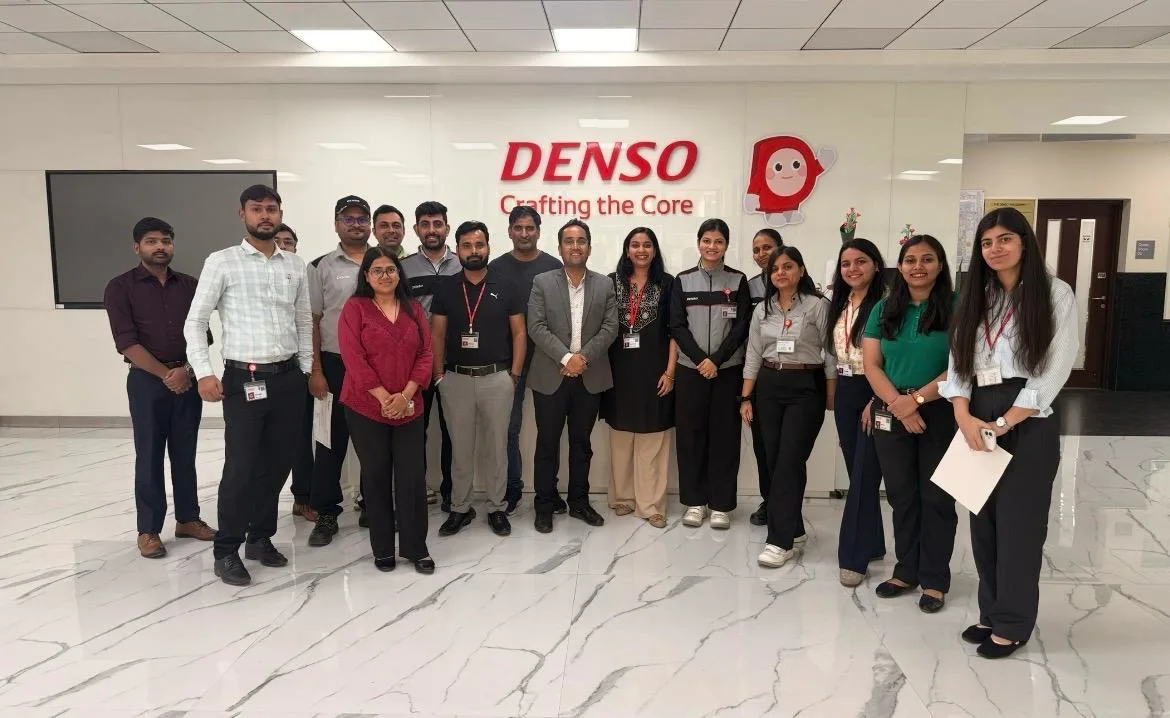
Gyansetu conducted Advanced Excel training for Denso International Employees
Denso International
Gyansetu conducted Full Stack Development training for ReverseLogix employees
ReverseLogix
Gyansetu conducted Advanced Java training for BML Munjal University students
BML Munjal University
Delivering training to Wedapt
Delivering Training To Wedapt
Gyansetu conducted workshop on Cloud Computing and Data Analytics for Manav Rachna University students
Manav Rachna University
Gyansetu conducted Java workshop for GLA University students
GLA University
Gyansetu conducted Data Analytics Workshop for DPGITM students
DPGITM
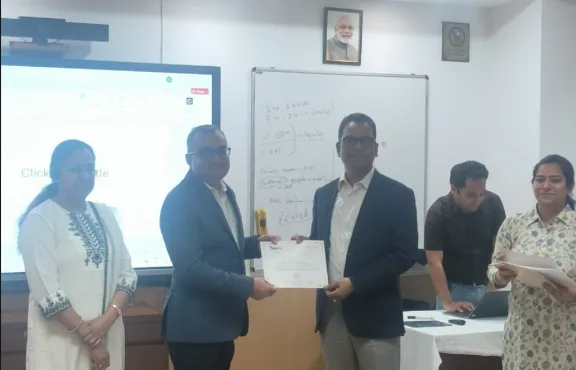
Certificate Issued to Gyansetu by GD Goenka University
GD Goenka University

FOR QUERIES, FEEDBACK OR ASSISTANCE

Contact Gyansetu Learner Support

Our Learners Testimonials

Pawan Kumar
I joined Gyansetu institute for Data Science, faculty is brilliant here. Training got completed in around 6 months.
Shruti Aggarwal
Gyansetu's practical learning methodologies have been invaluable. Institute focuses on hands-on projects and industry-relevant curriculum equipped me with the skills needed to analyze complex datasets and derive actionable insights for my organization.
Divya Singh
I was passionate about data analysis it was an amazing experience learning Data Analytics from Gyansetu. Here the faculties helped me learn from the basics to advanced concepts and with the practice on real projects I was able to crack the job.
neeraj verma review
self assessment
Self Assessment Test

Learn, Grow & Test your skill with Online Assessment Exam to achieve your Certification Goals.

FAQ: Data Structures And Algorithms Course Gurgaon

Q1. What will I learn in this DSA course?

You will learn not only everything about data structures and algorithms – arrays, linked lists, stacks, queues, trees, graphs, heaps, hashing, dynamic programming, greedy algorithms, backtracking, recursion, bit manipulation, searching algorithms, sorting algorithms, string processing, mathematical algorithms and so on. The course has 500 + coding questions that start with simple array operations to complicated graph algorithms, system design, complex optimization methods, etc, so that you are adequately prepared to solve interviews at Google, Amazon, Microsoft and other tech giants.

Q2. How long does it take to complete the DSA course?

We have a DSA course which will have various time span options so that it fits in your schedule. The training can be completed within 4 months during our weekday batches, 6 months during our weekend batches or within our fast-track 45 days intensive program. Each batch is based on the same set of comprehensive curriculum that consists of 500+ practice problems, live coding sessions, mock interviews, and certification. Select the pace that best suits your present obligations, and at the same time be able to grasp all the concepts to the letter.

Q3. Do I need prior programming experience to join?

It requires basic knowledge of programming in any programming language (Python, Java, C++, or JavaScript) but does not mandate it. Our training will be available to both the novice and the experienced programmer since we will start with the basics and then move up to more advanced subjects. Our teachers offer one on one support to enable you to learn concepts at your level. Be it a college student, professional, or a career switcher, our systematic method will help you create the best problem-solving foundations and have an effective mastery of DSA concepts.

We also allow the use of various programming languages such as Python, Java, C++ and JavaScript which means that you can learn in a language of your choice. The curriculum helps you to learn the basic concepts of DSA, problem solving patterns, algorithm thinking and optimization techniques instead of syntax of a specific language. Everything is described in a language-neutral fashion and you can learn to implement data structures, algorithms, dynamic programming, graph traversals, and others in whatever language suits your career objectives or interview.

We provide good competitive prices and options of payment such as full payment, installments and EMI. The prices of courses depend on the type of a batch (weekday, weekend, or fast-track) and lifetime access to all materials, 500+ practice questions, online sessions, simulated interviews, placement, and certification. Get in touch with our admissions department to get up-to-date pricing, for current discounts, scholarships and individualized payment plans. We have group discounts as well as speciality rates to students and early enrollees.

Yes, when you complete it successfully you will have an industry accepted certificate that will prove that you are knowledgeable in data structures, algorithms, problem-solving and interview preparation. This certificate can be posted on LinkedIn, the resume, portfolio, and other social networks to demonstrate your abilities to prospective employers. The certificate contains special verification certificates, which improve your credibility in the eyes of recruiters in leading tech companies such as Google, Amazon, Microsoft and your dedication to professional growth and technical excellence.

Good DSA skills provide an opportunity to work in many high paid jobs such as Software Developer, Backend Engineer, Frontend Engineer, Full-Stack Developer, Data Scientist, Machine Learning Engineer, System Architect, Competitive Programmer, and Technical Consultant among others. The average salaries of DSA-skilled developers are between 8-25 LPA when joining the company as new workers.

Whereas programs such as LeetCode offer practice problems, our organized DSA course entails in-depth learning through expert-led education, individualized mentoring, live coding classes, instruction on concepts, pattern recognition approaches, simulated interviews, placement services, and career management. We do not only train you on how to solve problems, but the reasons behind these solutions, the identification of patterns, optimization, the identification of complexity and the ability to communicate effectively in an interview. We offer a combination-based curriculum that incorporates theory, practice, and real-world application, and preparation of interviews in a package.

Absolutely! Our placement services include job referrals to product-based firms, resume advice, LinkedIn profile development, mock interview advice, salary negotiation advice, and individual career counseling. Hundreds of students have gone on to 40-100% salary increases and make the move into FAANG company or unicorn startups in India and around the world.

We have small groups ( students) to guarantee a personal approach, interaction, and solving the doubts. Instructions are given in live online format, where the instructor engages in real-time with students and conducts classes via screen sharing, coding lessons, demonstrations, question and answer, and interactive problem solving. You will also receive recorded programs, practice exercises, discussion groups, and lifetime support. The structured learning and self-paced practice will make our hybrid approach to be the most effective way to learn and at the same time you will be flexible with the time you have to study.

Our teachers and mentors are experienced professionals who use 10 years or more of their time in world- largest tech firms such as Google, Amazon, Microsoft, and Meta, Netflix, and product-based organizations. They include real-life interview experiences, real-life problem-solving techniques, best practices in industry, and extensive experience with data structures, algorithms, system design, competitive programming, and technical hiring. 

Yes! You will also have unlimited access to all the course content such as video lectures, practice problems, code assignments, explanation of the solutions, mock tests, interview guide, and future updates in the curriculum. This will guarantee that you will be able to review what you have learned any time you find the need and update your knowledge in time before interviews, keep up with the new trends in problem-solving, and keep practicing even when certified. We will always have an open learning platform, and you will also have access to our alumni community, instructor support, and career guidance services as long as you continue with your career path.

We offer several avenues of doubt resolution such as live Q as A during classes, doubt clearing sessions, appointing mentors to each student, active community forums, instructor support using messaging systems, and peer to peer discussions. Our teachers are very receptive and they are determined to make each point crystal clear. You may also ask questions concerning algorithms, data structures, problem-solving strategies, interview strategy, career advice, etc. We usually get questions answered in the shortest time possible (24 hours), so that your learning process will not lag.

Our students have had outstanding performance in 85% and above placement rates in product based firms and 60-120% averages in salary increments after training. Our hundreds of graduates are now employed by Google, Amazon, Microsoft, Meta, Apple, Oracle, Walmart, Flipkart, and the most prominent startups. Students state that they become confident in their ability to solve complex problems, crack multiple interview rounds, get competitive offers, and have long-term careers in the software development, data science, machine learning, and system architecture roles at the most desired organizations.

Absolutely! Weekday, weekend, and fast-track batches are specifically created to accommodate working professionals with flexible schedules. The training can be done over a 4 month (weekdays), 6 month (weekends), or 45 days (fast-track) period, when you are still doing your current job. The classes will be conducted at convenient times, the recorded sessions could be watched and our self-paced assignments will enable you to learn at your pace. Our program has helped thousands of working professionals upgrade, change professions and exploit substantial salary increases

frequently asked questions by students for courses
Drop us a Query
+91-9999201478

Available 24x7 for your queries

Please enable JavaScript in your browser to complete this form.
Categories