Q1: What is SQL and why should I learn it in 2026?
SQL, which stands for Structured Query Language, is the standard language used for storing, querying, and managing data in a relational database system. This language is used in databases like MySQL, SQL Server, Oracle, and PostgreSQL, which form the backend systems for popular websites such as Facebook, Twitter, Wikipedia, YouTube, and almost all enterprise applications in the Indian IT industry. By 2026, knowledge of SQL becomes a requirement for data analysts, business analysts, backend developers, and database administrators working in Gurgaon’s Cyber City and Udyog Vihar technology districts. As of today, there are 1,072 openings for SQL developers in Gurgaon (as per Glassdoor April 2026).
Q2: What is the salary of an SQL developer in Gurgaon?
The starting salary of an SQL developer in Gurgaon ranges between ₹5 and ₹7 LPA, as per the upgrad.com salary guide for 2025 in India. The average salary for SQL developers in India is ₹4.88 LPA (as per Payscale 2026) — whereas the salaries in Gurgaon and Bengaluru usually exceed the national average because of the presence of many MNCs and product companies. An experienced SQL developer who possesses skills such as writing procedures, optimization, and knowledge of PL/SQL can expect a salary of ₹8-15 LPA.
Q3: What is the difference between SQL, MySQL, SQL Server, and Oracle?
SQL is the language; it is the command that is executed on any relational database. MySQL, SQL Server, and Oracle are the DBMS; they are the software systems for managing data and interpreting SQL commands. MySQL is an open source software that is popular among startups, e-commerce companies, and web-based businesses. SQL Server is the Microsoft enterprise database management system; it is the most popular DBMS in Indian multinationals. Oracle is the DBMS that dominates the financial services domain. This course focuses on all 3 DBMS systems; hence you will be able to work for more than one company post completion.
Q4: Do I need prior programming experience for SQL training in Gurgaon?
Prior knowledge of programming is not needed. SQL is not a general purpose programming language. It’s a querying language that’s meant to be easy to understand and learn for anyone who doesn’t have a computer science education. Module 1 begins at ground zero – defining databases, understanding what SQL is, and writing your first SELECT statement. This course has been taken by marketers, accountants, HR managers, and even fresh graduates who have never coded before in their lives.
Q5: What is the difference between SQL and PL/SQL?
SQL is the standard language for writing queries to perform all types of data manipulation activities like retrieval, insertion, deletion, or updates of the records. PL/SQL is an extension of standard SQL with the introduction of various procedural elements in the form of variables, loop control structures, conditions, error handling, etc., which makes it a powerful language when compared to standard SQL. PL/SQL is used for writing programs within the Oracle database. You will require SQL before getting into PL/SQL.
Q6: Which companies hire SQL developers in Gurgaon?
There are several sectors in Gurgaon that hire SQL programmers, which include IT services companies, product/e-commerce companies, and BFSI companies. Some of the IT services companies that are currently recruiting SQL developers in Gurgaon include Tata Consultancy Services (TCS), Infosys, Wipro, HCL, Accenture, Ericsson, and Luxoft. These IT companies operate from the Cyber City, Udyog Vihar, and DLF Phase regions. BFSI companies such as American Express and Barclays recruit SQL developers for database management jobs.
Q7: What jobs can I get after SQL training in Gurgaon?
Six job roles are available for those who pass through the SQL course training, namely SQL Developer, Database Administrator (DBA), Data Analyst, BI Developer, Backend Developer (SQL), and Data Engineer. Specifically in Gurgaon, according to Glassdoor, there are 1,072 openings for SQL developers as of April 2026. The placement team of Gyansetu will help you prepare your resume based on the 5 projects that you have done during the course and also train you in the technical rounds of SQL that companies such as TCS, Infosys, and Genpact follow.
Q8: What is the difference between SQL and Python for data analysis?
Data extraction and transformation are done using SQL – it’s the tool with which we retrieve data from a database. Python, on the other hand, is utilized in analysing and visualizing the data once it’s extracted. In most cases, it is SQL rather than Python that will be required right away, especially when one wants to do analysis in any firm; one will start off working with SQL to extract data needed by a manager within the first week on the job. Python, however, is increasingly becoming part of the skill set for more senior roles.
Gyansetu’s Data Analytics course covers both.
Q9: What is a stored procedure and why does it matter?
A stored procedure refers to a pre-defined group of SQL instructions saved in the database, invoked using a single instruction and not having to be created anew each time. Why does it matter? There are three main reasons. First, efficiency: the execution plan of a stored procedure is optimised only once by the database system rather than with each new query. Secondly, safety: stored procedures are used by applications without granting them table-level permissions to protect against SQL injection. Finally, ease of maintenance: changing the business logic within a stored procedure is done once instead of repeating changes in each application connecting to the database.
Q10: What is the duration of the SQL training in Gurgaon?
Training in SQL provided by Gyansetu Training Institute of Gurgaon covers a total of 8 modules starting from basics of SQL to query optimization. Weekend and Weekday batches are offered for freshers as well as working professionals. All live classes are recorded and made available for lifetime access so that you don’t miss out on your learning even during the busiest week of your college exams.
Q11: What is the fee for SQL training in Gurgaon?
The SQL Training fee at Gyansetu, Gurgaon, covers modules, five live database projects, job assistance, and lifetime access to all the resources. Payment by instalments is possible. A demo class is also provided for free prior to registration. For further information regarding the fee structure and upcoming batches, contact Gyansetu, Gurgaon, at +91-9999201478.
Q12: What certificate do I receive after SQL training in Gurgaon?
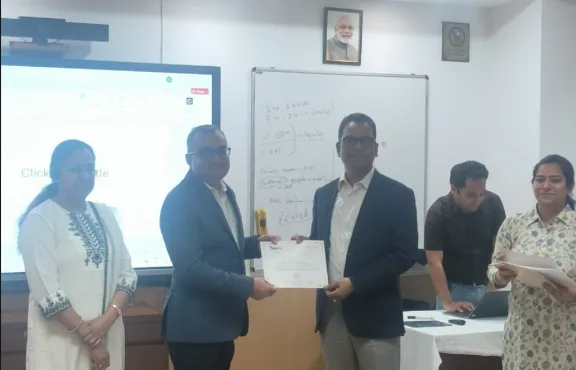
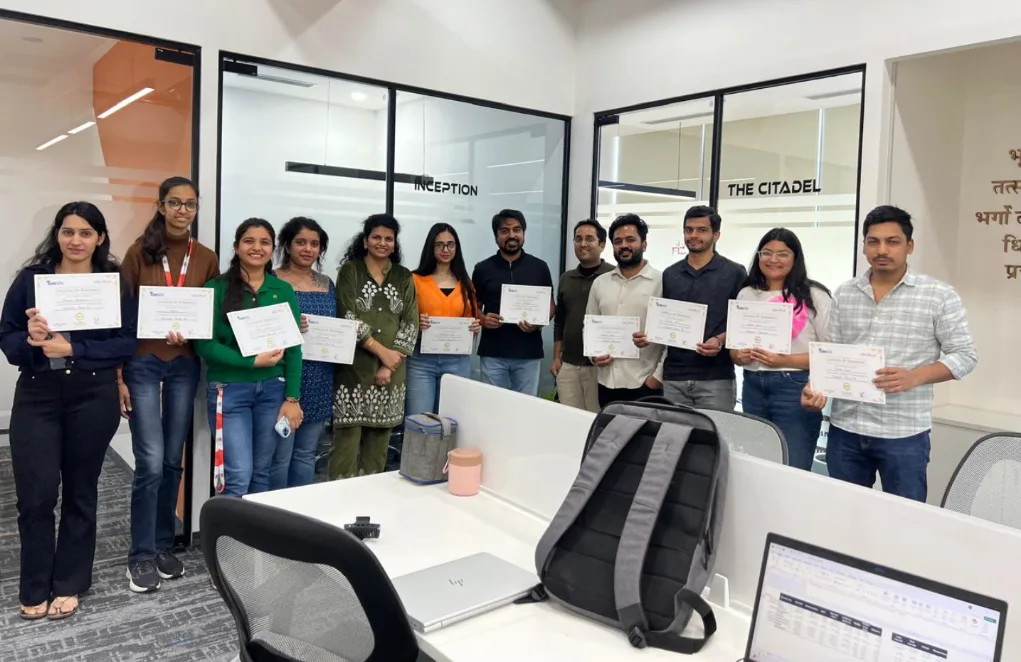
You are given a Gyansetu certificate that is accredited by NASSCOM – National Association of Software and Services Companies. This certificate will be appreciated by the IT service providers, multinational companies, as well as product manufacturing companies located in Cyber City and Udyog Vihar regions of Gurgaon. The certificate also comes along with a unique identification code, which can be verified through gyansetu.in website within 60 seconds by any prospective employer.


 Industry Mentors
  Complete Toolkit
  Beginner to Pro Roadmap
  AI-Powered Learning
  Practical Learning
  Career Support