Generative AI Course in Mumbai Overview

Welcome to the most comprehensive generative AI course in Mumbai at Gyansetu. Here we also change careers through our in-depth and highly developed training programmes. As stated by Bloomberg Intelligence (2024), the generative AI market is already going to boom to an incredible level of 1.3 trillion by 2032, which means that there is an enormous global demand in AI specialists. That is why we are offering the best AI course in Mumbai for working professionals and it is specifically designed to make you the leader of this technological change.

Our curriculum is full of value and practical knowledge. You will read all about sophisticated prompt engineering and intricate fine-tuning of LLMs as well as creating autonomous AI agents, RAG pipelines, multimodal image generation, LangChain, Hugging Face, and so on. We do not restrict you to the fundamentals, but you will learn how to construct innovative solutions.

We also provide the ultimate flexibility in our learning routes: you can take the training on weekdays(2 months), on weekends(3 Months) or simply on 30 days with our intensive fast-track programme.

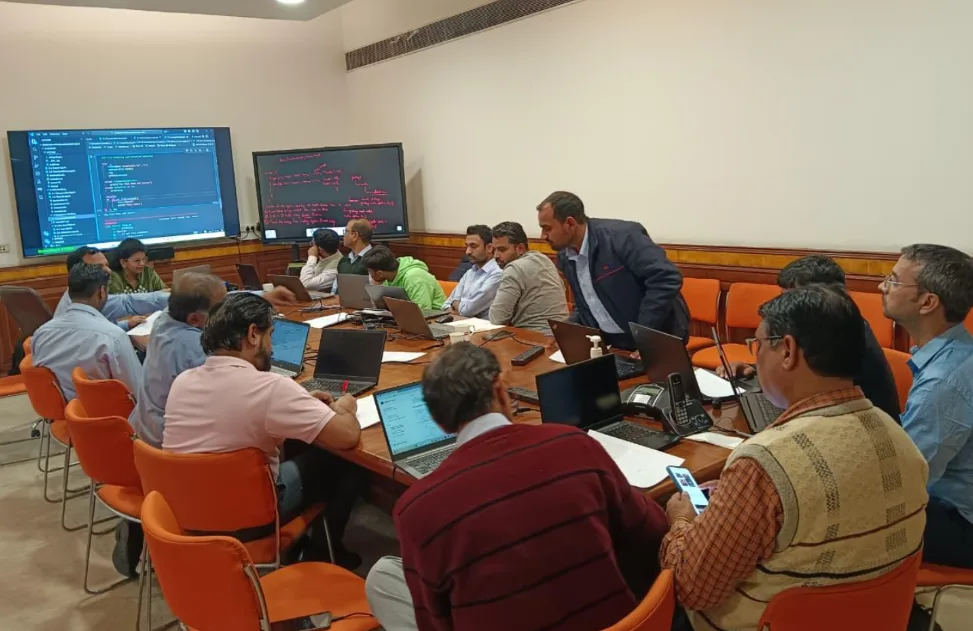
You can be a part of dynamic generative AI workshop in Mumbai and we are to make you successful at each moment. Discover why Gyansetu is the perfect choice for the future in AI.

Why Choose Gyansetu’s Generative AI Course in Mumbai?

Find out why we are the best generative AI institute in Mumbai. We also provide endless learning, unmatched knowledge, and many resources to be able to kick-start your career in AI.

  1. Comprehensive AI Curriculum: Master prompt engineering, LLM fine-tuning, RAG pipelines, etc.
  2. Flexible Learning Options: Study at your own pace with 2 months weekdays, 3 months weekends and 30 days fast-track batches.
  3. For Working Professionals: Our course is equipped with a variety of superior methods on how to impact business and technology instantly.
  4. Hands-on Workshops: Practice models, agents and others much more directly in a dynamic generative AI workshop in Mumbai with interactive, real world projects.
  5. Global Online Access: You can always study generative AI in Mumbai online with ease, everywhere and with much support, both live and more.
  6. Master Numerous Tools: Deep learning with ChatGPT, Midjourney, LangChain, Hugging Face, and many other popular technologies that are applied by the highest-ranking professionals.
  7. Experienced AI Experts: Our instructors have the experience of years in the sphere, the best practices, the strategies of implementation, and numerous even deeper insights on AI.
  8. Real-world AI Projects: Create chatbots, content generators, document systems, and numerous other applications to make an incredibly impressive portfolio.
  9. Unmatched Career Support: We provide full-time advice, including CV optimisation, interviewing advice, creating a portfolio and outstanding placement services in innovative leading firms.
  10. Recognized Certification: Get a certificate which is recognized globally and enhances professional credibility

generative-ai-course-in-mumbai

Key Highlights of Generative AI Course

100% Placement Support
Free Course Repeat Till You Get Job
Mock Interview Sessions
1:1 Doubt Clearing Sessions
Flexible Schedules
Real-time Industry Projects

Placement Stats

stats
Maximum salary hike
170%
Average salary hike
90%

Our Alumni in Top Companies

Generative AI Course Placement Highlights

Avinash
74 % Hike
Data Analyst
NTK
Google
Data Analyst
Google
Priya Paswan
57 % Hike
Sales Consultant
Hear.com
Senior Data Analyst
Vistara

Batches Timing for Generative AI Course

Track Weekdays (Tue-Fri) Weekends (Sat-Sun) Fast Track
Course Duration 4 Months 6 Months 30 Days
Hours Per Day 2-3 Hours 3-4 Hours 6 Hours
Training Mode Classroom/Online Classroom/Online Classroom/Online

Generative AI Professional Certification Course in Mumbai

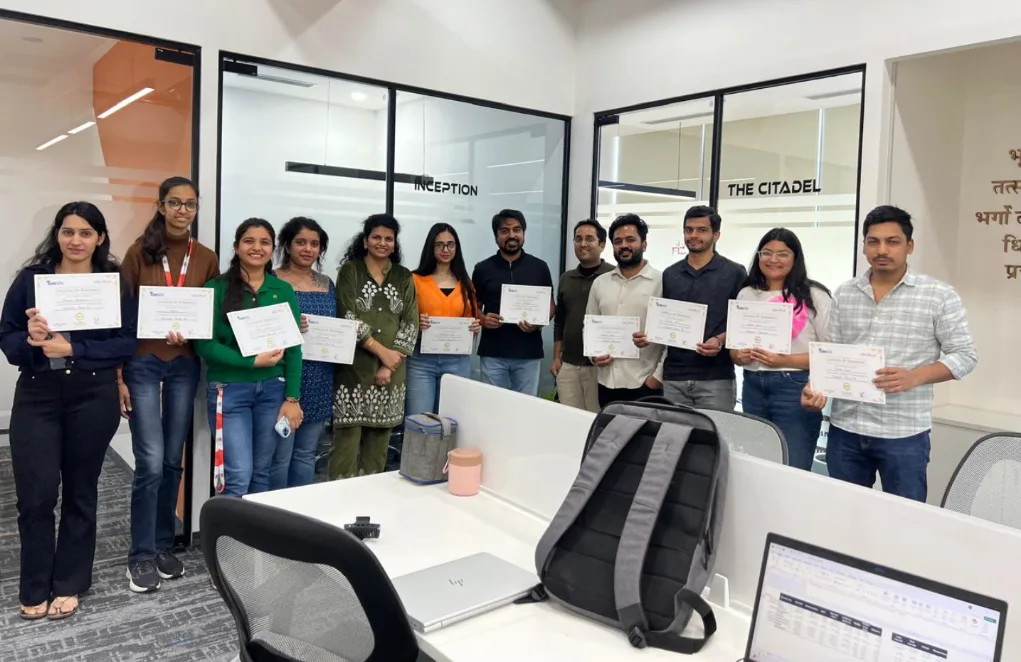
A certificate demonstrates your knowledge in AI in the rapidly emerging market. After successful completion of the Generative AI course in Mumbai, you will get a highly valuable certificate that you can post directly on LinkedIn, in your CV, in your portfolio, and on social media.

  • Industry Reputation: Our certificate is widely regarded as the finest in the fields of generative AI in all its forms including LLM fine-tuning, autonomous AI agents, RAG pipelines, and many others in Mumbai and globally.
  • Verifiable Authenticity: Each diploma, our course offers, has a special non-transferable online verifiable code.
  • Maximum Career Impact: Regardless of whether you are going to the classroom or prefer to take an online batch, this certificate gives you instant access to a variety of leadership positions and career possibilities in the field of artificial intelligence.

Generative AI Course Curriculum

Prepare for your dream career through our practical and comprehensive curriculum that will prepare you for the future. Regardless of which type of course you enroll in either offline or online, we will provide you with a full learning process. By application-based work and an innovative curriculum that encompasses both the basics and the state-of-the-art applications.in-depth courses.

Module 1: Artificial Intelligence Fundamentals 6 Topics

1.1 Introduction to AI

  • What is Artificial Intelligence?
  • AI vs. Automation vs. Analytics: Understanding the distinctions
  • Types of AI: Narrow AI, General AI, and Super AI
  • Real-world examples of AI in action


1.2 AI Family Tree

  • AI, Machine Learning (ML), and Deep Learning (DL): Relationships and differences
  • Supervised vs. Unsupervised vs. Reinforcement Learning (brief overview)
  • Neural Networks: The building blocks


1.3 History & Evolution of AI

  • Key milestones: From Turing Test to AlphaGo to ChatGPT
  • AI winters and breakthroughs
  • Current state of AI


1.4 Core AI Applications

  • Natural Language Processing (NLP): chatbots, translation, sentiment analysis
  • Computer Vision (CV): facial recognition, object detection, medical imaging
  • Robotics & Autonomous Systems
  • Predictive Analytics: forecasting, recommendation systems


1.5 AI Across Industries

  • HR: Recruitment screening, employee engagement analysis
  • Operations: Supply chain optimization, predictive maintenance
  • Healthcare: Diagnosis assistance, drug discovery
  • Retail: Personalization, inventory management
  • Education: Adaptive learning, automated grading
  • Finance: Fraud detection, algorithmic trading
  • Manufacturing: Quality control, process automation


1.6 Future of AI

  • Emerging trends: Multimodal AI, Edge AI, Quantum ML
  • Opportunities: Productivity gains, innovation acceleration
  • Risks: Job displacement, privacy concerns, weaponization
Module 2: Generative AI Foundations 9 Topics

2.1 Introduction to Generative AI

  • What is Generative AI? Definition and characteristics
  • Traditional AI (predictive) vs. Generative AI (creative)
  • Everyday GenAI applications: Writing assistants, image generators, code completion
  • Popular GenAI tools: ChatGPT, Claude, Gemini, DALL-E, Midjourney


2.2 How GenAI Works

  • Large Language Models (LLMs) explained simply
  • Introduction to Transformers: Attention mechanism in plain language
  • Tokens and tokenization
  • Training vs. Fine-tuning vs. Inference
  • Parameters and model size (7B, 70B, 405B – what do they mean?)


2.3 Key GenAI Models Overview

  • OpenAI GPT family (GPT-4, GPT-4o, o1)
  • Anthropic Claude (Sonnet, Opus, Haiku)
  • Google Gemini
  • Meta LLaMA
  • Open-source vs. Closed-source models
  • Strengths and limitations of each


2.4 Recent Trends & Important Concepts

  • Multimodal AI (text + image + audio + video)
  • Context windows and long-form understanding
  • Retrieval-Augmented Generation (RAG)
  • AI reasoning models (o1, o3)
  • Real-time AI and streaming responses


2.5 Prompt Engineering Fundamentals

  • What is a prompt?
  • Anatomy of a good prompt: Role, Task, Context, Format, Constraints
  • Text generation and completion
  • Summarization: Short vs. detailed summaries
  • Rewriting: Tone adjustment (formal, casual, persuasive, empathetic)
  • Translation and localization


2.6 Prompt Structures

  • Instructional prompts
  • Role-based prompts (“Act as a…”)
  • Template-based prompts
  • Structured output requests (JSON, tables, lists)


2.7 Core Prompting Techniques

  • Zero-shot prompting: Direct instructions
  • Few-shot prompting: Learning from examples
  • Chain of Thought (CoT): Step-by-step reasoning
  • Tree of Thoughts (ToT): Exploring multiple reasoning paths
  • Self-consistency: Multiple attempts for better answers


2.8 Multi-turn Interactions

  • Context retention and conversation memory
  • Building on previous responses
  • Clarification and refinement loops


2.9 Limitations & Quality Evaluation

    • Hallucinations: What they are and how to spot them
    • Bias in AI outputs
    • Factual accuracy verification
    • Evaluating output quality: Relevance, coherence, accuracy, creativity
    • When to use AI vs. human judgment
Module 3: Advanced LLMs & Prompting Techniques 7 Topics

3.1 LLM Deep Dive

  • How transformers process language
  • Attention mechanisms visualized
  • Pre-training and next-token prediction
  • Temperature and sampling parameters
  • Top-p, Top-k sampling explained


3.2 LLMs vs. Small Language Models (SLMs)

  • When to use LLMs vs. SLMs
  • Edge deployment and efficiency
  • Cost considerations


3.3 Popular LLM Comparison

  • GPT-4: Strengths in reasoning and creativity
  • Claude: Long context and nuanced understanding
  • Gemini: Multimodal capabilities
  • LLaMA: Open-source flexibility
  • Use case mapping: Which model for which task?


3.4 Advanced Prompting Techniques

  • Self-consistency prompting
  • Instruction tuning and prompt optimization
  • Negative prompting (what to avoid)
  • Constraint-based prompting
  • Persona switching and style guides
  • Prompt chaining for complex tasks


3.5 Context Management

  • Working with large documents
  • Context window limitations and strategies
  • Summarization for context compression
  • Conversation history management


3.6 Introduction to Embeddings

  • What are embeddings?
  • Vector representations of text
  • Semantic search applications
  • Use cases: Document similarity, recommendation systems


3.7 Fine-tuning Basics

  • What is fine-tuning?
  • When to fine-tune vs. prompt engineer
  • Transfer learning concept
  • No-code fine-tuning platforms (brief overview)

4.1 Introduction to Agentic AI

  • What is Agentic AI?
  • Key characteristics: Autonomy, goal-directedness, adaptability
  • Agentic AI vs. Traditional AI workflows
  • Real-world examples: Research agents, customer service agents, coding agents


4.2 AI Agents vs. Chatbots

  • Chatbots: Reactive, scripted interactions
  • AI Agents: Proactive, goal-oriented, tool-using
  • Comparison matrix


4.3 Components of Agentic AI

  • Memory: Short-term and long-term context retention
  • Planning: Breaking down goals into sub-tasks
  • Tool Use: API calls, web search, code execution, database queries
  • Autonomy: Self-directed task completion
  • Reflection: Self-evaluation and improvement


4.4 Agent Frameworks Overview

  • LangChain: Modular components for agent building
  • AutoGen: Multi-agent conversations
  • CrewAI: Role-based agent collaboration
  • OpenAI Assistants API: Built-in agent capabilities
  • Comparison and use case mapping


4.5 AI Orchestration

  • What is orchestration?
  • Workflow design for agent tasks
  • Human-in-the-loop (HITL) integration
  • Error handling and fallback strategies

5.1 No-Code AI Overview

  • What is no-code/low-code?
  • Benefits: Speed, accessibility, cost-effectiveness
  • Limitations: Customization constraints, vendor lock-in
  • When to use no-code vs. custom development


5.2 Workflow Automation Fundamentals

  • Triggers, actions, and conditions
  • API integrations basics
  • Data mapping and transformation
  • Error handling and testing


5.3 Zapier

  • Platform overview and interface
  • Building your first Zap
  • Multi-step workflows
  • AI-powered Zaps with ChatGPT integration
  • Filters, formatters, and utilities
  • Best practices and optimization
  • Hands-on: Automate email-to-task workflow


5.4 Make.com

  • Visual workflow builder
  • Modules, routes, and scenarios
  • Advanced routing and error handling
  • Data stores and aggregators
  • Scheduling and webhooks
  • Hands-on: Build a content aggregation workflow


5.5 n8n

  • Self-hosted automation (overview)
  • Node-based workflow design
  • Custom code nodes
  • Integrations and credentials management
  • Hands-on: Create a Slack notification system


5.6 Notion AI

  • AI writing and editing
  • Database automation
  • Template creation with AI
  • Q&A over workspace knowledge
  • Hands-on: Build an AI-powered knowledge base


5.7 Airtable

  • AI-powered data management
  • Automation with AI fields
  • Integration with other tools
  • Building mini-apps
  • Hands-on: Create a project tracker with AI summaries


5.8 Glide

  • No-code app builder
  • AI-powered features
  • Data binding and workflows
  • Mobile app prototyping
  • Hands-on: Build a simple internal tool


5.9 Canva AI

  • Text-to-design generation
  • AI brand kit creation
  • Magic Resize and Magic Eraser
  • AI-powered content suggestions
  • Hands-on: Create a presentation with AI


5.10 Tome AI

  • AI-powered storytelling
  • Auto-generating narratives
  • Interactive presentations
  • Hands-on: Build a pitch deck


5.11 Gamma.app

  • AI slide deck creation
  • One-click formatting
  • Collaborative editing
  • Hands-on: Generate a training module


5.12 Integrating AI into Business Processes

  • Identifying automation opportunities
  • Workflow mapping and optimization
  • Change management considerations
  • Measuring ROI of automation
  • Building a toolkit for your role

6.1 Agent Design Principles

  • Defining agent goals and scope
  • Task decomposition
  • User experience considerations
  • Edge case handling


6.2 No-Code Agent Platforms

  • Relevance AI: Building AI teams
  • Stack AI: Workflow-based agents
  • Flowise: Visual LLM app builder
  • Voiceflow: Conversational agents
  • Platform comparison and selection


6.3 Building Your First Agent

  • Step-by-step agent creation
  • Defining instructions and personality
  • Adding tools and integrations
  • Knowledge base integration (RAG)
  • Testing and iteration


6.4 Practical: AI Research Assistant Agent

  • Goal: Automated web research and summarization
  • Components:
    1. Web search capability
    2. Content extraction
    3. Summarization
    4. Report generation
    5. Email delivery
    6. Tools: n8n/Make + GPT API + Google Docs
  • Build process:
    1. Design the workflow
    2. Set up web search module
    3. Configure summarization
    4. Create output template
    5. Add scheduling
    6. Test and refine


6.5 Advanced Agent Features

  • Memory and context persistence
  • Multi-tool orchestration
  • Conditional logic and branching
  • User input handling
  • Feedback loops


6.6 Deployment & Monitoring

  • Publishing your agent
  • Usage analytics
  • Performance monitoring
  • Iterative improvement
  • Cost management

7.1 AI Challenges


Bias

  • What is AI bias?
  • Sources: Training data, algorithm design, human feedback
  • Types: Gender, racial, cultural, socioeconomic
  • Real-world examples and consequences
  • Detection and mitigation strategies


Hallucinations

  • What are hallucinations?
  • Why LLMs hallucinate
  • Identifying hallucinations
  • Mitigation: Verification, grounding, confidence scoring


Privacy & Security

  • Data privacy concerns
  • Prompt injection attacks
  • Data leakage risks
  • Secure AI usage practices
  • Compliance considerations (GDPR, CCPA)

Misinformation & Deepfakes

  • AI-generated content detection
  • Deepfake risks
  • Watermarking and provenance
  • Media literacy in AI age


7.2 Responsible AI Principles

  • Fairness: Eliminating discriminatory outcomes
  • Accountability: Clear ownership and responsibility
  • Transparency: Explainability and disclosure
  • Explainability: Understanding AI decisions
  • Privacy: Data protection and consent
  • Safety & Security: Robustness and resilience
  • Human Control: Human-in-the-loop systems


7.3 Global AI Ethics Frameworks


OECD AI Principles

  • Inclusive growth and sustainability
  • Human-centered values
  • Transparency and explainability
  • Robustness and safety
  • Accountability


EU AI Act

  • Risk-based approach
  • Prohibited AI practices
  • High-risk AI systems
  • Transparency obligations
  • Compliance requirements


NITI Aayog (India)

  • #AIForAll vision
  • Responsible AI strategy
  • Focus on explainability and fairness
  • Sector-specific guidelines


UNESCO Recommendation on AI Ethics

  • Human rights and dignity
  • Environmental sustainability
  • Cultural diversity
  • Gender equality


Microsoft Responsible AI

  • Six principles framework
  • Impact assessments
  • Governance structure
  • Practical tools


7.4 Safe & Responsible Usage


Verifying AI Outputs

  • Cross-referencing with trusted sources
  • Fact-checking methodologies
  • Using multiple AI models for comparison
  • Critical evaluation frameworks


Human-in-the-Loop (HITL) Systems

  • When to require human oversight
  • Designing HITL workflows
  • Balancing automation and control
  • Decision authority frameworks


Trust & Compliance

  • Building organizational AI policies
  • Training and awareness programs
  • Audit trails and documentation
  • Incident response plans


7.5 Responsible AI Guardrails

  • Input validation and filtering
  • Output moderation
  • Rate limiting and abuse prevention
  • Content policies and guidelines
  • Monitoring and alerting systems


7.6 Case Studies of AI Misuse

  • Amazon’s biased recruiting tool
  • COMPAS recidivism algorithm
  • Deepfake political videos
  • ChatGPT jailbreaks and prompt injection
  • Lessons learned and best practices


7.7 Building Ethical AI Culture

  • Organizational responsibilities
  • Individual accountabilities
  • Ethical decision-making frameworks
  • Continuous learning and adaptation

Multimodal AI

  • GPT-4 Vision, Gemini 1.5 Pro
  • Audio and video generation
  • Applications in business


AI Video & Audio Tools

  • Runway ML, Synthesia, ElevenLabs
  • Use cases: Training videos, marketing content
  • Ethical considerations


Retrieval-Augmented Generation (RAG)

  • What is RAG?
  • Building knowledge bases
  • No-code RAG solutions


AI in Code Generation

  • GitHub Copilot, Cursor, Replit AI
  • Low-code development acceleration
  • When to use AI coding assistants

Industry Ready Data Analyst Projects

Designed by Industry Experts
Get Real-World Experience
Market Basket Analysis for Retail Optimization

This project analysis customer purchase behaviour. You will work upon rule mining techniques and algorithms to identify co-occurring items. Retailers can optimize product placement, inventory management and promotions to increase selling opportunities, enhance customer satisfaction and maximise revenue.

Sentiment Analysis for Social Media Monitoring

This project uses techniques to analyse sentiments in social media posts, online discussions and customer reviews by classifying text data as positive, negative, neutral. It greatly helps businesses to examine public sentiments, emerging trends and make data driven decision making.

clock-icon
320+
Hours of content
video
80+
Live sessions
hammer
7+
Tools and software

Generative AI Skills you can add in your CV

Generative AI Tools Covered

What Sets This Program Apart?

GyanSetu
Other Courses
all-in-one Complete Toolkit

✔ LLM fundamentals & Gen AI models
✔ Transformers & Diffusion models
✔ Toolkits for app building (APIs, Agents)
✔ Deployment & scaling

✘ Only basic AI theory
✘ Limited tooling exposure

progress-icon Beginner to Pro Roadmap

✔ Starts from fundamentals → advanced Gen AI solutions

✘ No structured progression

empowered AI-Powered Learning

✔ Built-in AI learning + Gen AI tools and projects

✘ No AI tools covered

focused Career Specialization

✔ AI Engineer
✔ GenAI Developer
✔ Prompt Engineering Specialist

✘ Only general AI overview

exposure Real Industry Projects

✔ Chatbots
✔ Autonomous agents
✔ Deployable AI apps

✘ Only demos / sample projects

mentorship Industry Mentors

✔ Mentors with real AI engineering experience

✘ Generic instructors

practice Career Support

✔ Resume building
✔ Mock interviews
✔ Placement assistance

✘ No structured job support

course in gurgaon
Who is this course for?
  • Students and Recent Graduates
  • Working Professionals
  • Career Changers
  • IT Professionals
  • Educators and Academic Researchers
  • Entrepreneurs and Business Owners

Career Assistance for Generative AI Course

briefcase
Job Opportunities Guaranteed

Get a 100% Guaranteed Interview Opportunities Post Completion of the training.

lock
Access to Job Application & Alumni Network

Get chance to connect with Hiring partners from top startups and product-based companies.

Mock Interview Session

Get One-On-One Mock Interview Session with our Experts. They will provide continuous feedback and improvement plan until you get a job in industry.

Live Interactive Sessions

Live interactive sessions with industry experts to gain knowledge on the skills expected by companies. Solve practice sheets on interview questions to help crack interviews.

lock
Career Oriented Sessions

Personalized career focused sessions to guide on current interview trends, personality development, soft skill and HR related questions.

briefcase
Resume & Naukri Profile Building

Get help in creating resume & Naukri Profile from our placement team and learn how to grab attention of HR’s for shortlisting your profile.

Top Companies Hiring for Generative AI Role

Honours & Awards Recognition

Awarded by GD Goenka University
GD Goenka University
Gyansetu conducted Power BI training for Livpure employees
Livpure
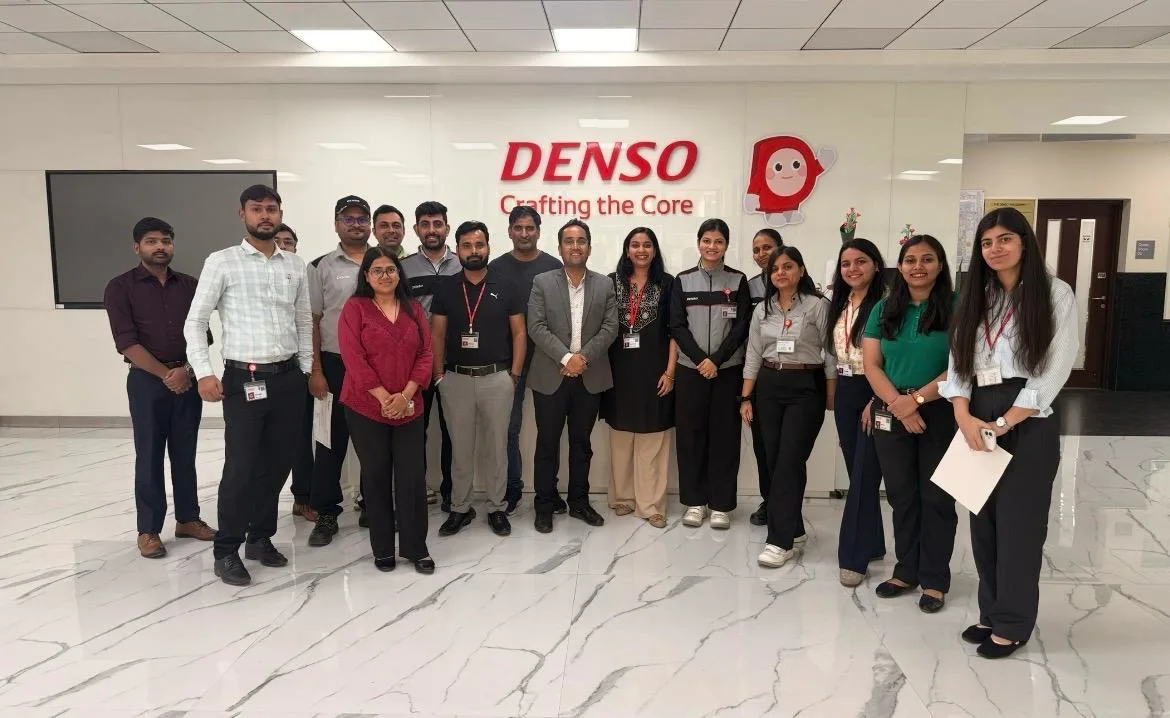
Gyansetu conducted Advanced Excel training for Denso International Employees
Denso International
Gyansetu conducted Full Stack Development training for ReverseLogix employees
ReverseLogix
Gyansetu conducted Advanced Java training for BML Munjal University students
BML Munjal University
Delivering training to Wedapt
Delivering Training To Wedapt
Gyansetu conducted workshop on Cloud Computing and Data Analytics for Manav Rachna University students
Manav Rachna University
Gyansetu conducted Java workshop for GLA University students
GLA University
Gyansetu conducted Data Analytics Workshop for DPGITM students
DPGITM
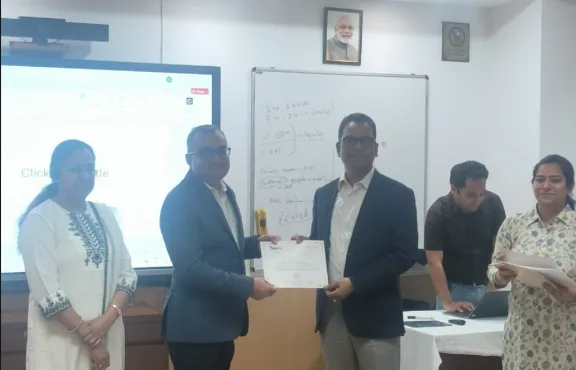
Certificate Issued to Gyansetu by GD Goenka University
GD Goenka University

FOR QUERIES, FEEDBACK OR ASSISTANCE

Contact Gyansetu Learner Support

Our Learners Testimonials

Ankita Mishra
Gyansetu’s commitment to practical learning has been evident throughout my journey as an Associate at EY. The institute’s focus on hands-on projects and real-world applications of Data Analytics principles equipped me with the skills and confidence needed to tackle complex business challenges in my role.
Anupriya Gupta
Transitioning into the role of Data Analyst at Google, I attribute much of my readiness to Gyansetu's practical learning environment. The institute's hands-on projects and real-world case studies provided me with the opportunity to develop the analytical skills necessary to thrive in a dynamic organization like Google.
Karan Bansal
I had a great learning experience with Gyansetu. The trainers were knowledgeable and supportive. The practical approach and hands-on training helped me in my work as an Insurance Operations Associate at Accenture.
self assessment
Self Assessment Test

Learn, Grow & Test your skill with Online Assessment Exam to achieve your Certification Goals.

FAQs: Generative AI Course in Mumbai

Q1: How long is the Generative AI course in Mumbai?

Our learning is highly flexible to your schedule. Our full course could be undertaken in 2 months either in our weekly sessions (weekdays), 3 months in our weekend sessions, or 30 days in our fast-track programme. No matter the route you take, you will know all about prompt engineering up to in-depth RAG pipelines among other things.

Q2: Do I need programming experience for this course?

Although knowledge of Python is required but not too advanced, we have made our curriculum easy-going to individuals with various backgrounds. During our AI course in Mumbai among working professionals, we begin with the basic ideas of AI and take you through the process of learning higher-level techniques. Regardless of your initial level, you will be taught to use such tools as LangChain, the OpenAI API, Hugging Face, and many others.

Q3: What is the difference between Generative AI and Machine Learning?

Machine Learning is mostly concerned with the analysis of data and forecasting trends. Generative AI goes even further by generating something completely new, such as text, pictures, code, video, etc. You will also learn how to use these leading-edge models, including LLMs and diffusion models, to develop innovative business solutions at the best generative AI institute in Mumbai.

We have an outstanding curriculum that is futuristic. You will have profound, practical work experience with some of the most important technologies, such as ChatGPT, Midjourney, LangChain, Stable Diffusion, Pinecone, Hugging Face, DALL-E, and a plethora of other enterprise-level technologies. We make sure that you do not learn only specific applications, but a whole ecosystem of AI technologies to any professional problem.

Absolutely! We appreciate the fact that the ability to be flexible is vital. You will have an option of attending physically at our modern premises or you will be free to learn about generative AI at the comfort of Mumbai through online learning. The two choices give the same high-quality content, interactive live-sessions, personal feedback on our professionals, and entry to our vast amount of AI professionals.

We differentiate ourselves through our deep and practical strategy and the industry expertise that is unmatched. The multimodal systems, autonomous agents, custom LLMs, and many others are complex and real-world projects that our students work on. We also provide flexible plans such as 2 month (week day), 3 month (weekend), and 30 day (fast-track) programmes and extensive career advice.

You will create a stunning and varied portfolio during our interactive sessions and at the generative AI workshop Mumbai. You will create high-tech applications that can be in the form of AI customer service chatbots and intelligent document question and answer systems, automated content generators, personalised recommendation systems, and many others. Such projects will demonstrate your abilities to the leading employers in the tech world.

Yes, our Mumbai AI course among busy working professionals is created keeping in mind busy working professionals. Our schedules are flexible which means you can continue with your career without disruption. You will acquire such skills as workflow automation, implementation of enterprise AI that can be applied in the work the very next day.

The need for AI specialists is increasing exponentially in the world. After completing it, you will be in an ideal place to work as Prompt Engineer, AI Developer, and even LLM Engineer, AI Product Manager, and a host of other innovative jobs. With the help of thorough training in such tools as LangChain, RAG architectures, and LLM fine-tuning, you will be an invaluable resource to any technology company in the present age.

On completion of your studies successfully, you will get a prestigious certificate handed to you by Gyansetu. This diploma certifies that you have a lot of knowledge about timely engineering, autonomous agents, AI ethics, and numerous other advanced skills. This is a professional certificate that you can simply include on your LinkedIn profile, CV and portfolio in order to boost your professional credibility greatly.

Certainly! We are hugely concerned with your career success at Gyansetu. Besides the vast technical training on our generative AI course in Mumbai, we provide intensive placement assistance. This involves CV optimisation and portfolio creation through simulation interviews and introductions to our vast network of top tech firms and innovative start-ups.

We have experienced AI professionals and experienced engineers who have years of experience in the industry. They do not merely impart theory, but they also exchange best practices, recent business approaches, architectural patterns and many more invaluable knowledge. You will get direct learning on the part of professionals who construct and execute advanced generative AI models to large international businesses day after day.

Yes, we have our vision of practice. We routinely include a workshop on intensive generative AI Mumbai in the curriculum. These hackathon-type events will see you pair with your colleagues to focus on complex architecture issues, model fine-tuning, prompt optimisation, and so on, enabling you to directly convert theory into real-life, working AI products.

You need not worry, we take care of everything. All lectures are recorded in high quality whether you pursue your studies face-to-face or prefer to learn generative AI in Mumbai on the Internet. All these, and all the presentations, code repositories, practice materials, and many other learning resources, will be available to you throughout your lifetime in our enhanced student portal.

Our education in the field of AI is of high quality and at very competitive and clear rates. We make our course affordable by offering reimbursement schemes such as interest-free EMI. Today, reach out to our advisory team to have the prices and find out how we are going to make your investment a stepping stone to a lifelong career.

frequently asked questions by students for courses
Drop us a Query
+91-9999201478

Available 24x7 for your queries

Please enable JavaScript in your browser to complete this form.
Categories