Generative AI Course in Pune Overview

According to recent studies, Generative AI will contribute up to 4.4 trillion to the world economy throughout the year, as reported by McKinsey in 2024. Use this historic technological opportunity with our full-fledged Generative AI program in Pune. At Gyansetu, we change your career to future-proof, practical skills.

Whether you’re specifically looking for generative AI classes in Pune as a beginner or require a comprehensive generative AI course in Pune as a software engineer, our curriculum has you covered. You will get to know a massive variety of technologies, including both basic ideas and advanced applications, such as prompt engineering, LLM fine-tuning, self-driven AI agents, RAG architecture, image generation, LangChain, and numerous other innovative methods.

We understand that professionals need flexibility. That is why you can graduate with a certificate in the best AI course in Pune in 2 months (weekdays), 3 months (weekends) or 30 days (intensive, fast-track course).

Our hands-on generative AI training in Pune is specifically designed to provide you with a conclusive competitive advantage on the modern job market, and the possibilities of career advancements are unlimited.

See below the reason why even ambitious professionals are turning to Gyansetu to successfully enter their careers in AI.

Why Choose Gyansetu?

We change your career with the final-generative AI training at Gyansetu, in Pune. We provide an unmatched educational experience, full of technologies, infinite innovation, and profound and directly applicable AI skills.

  1. Comprehensive GenAI curriculum: Learn the basics of LLM, RAG architectures, autonomous AI agents, image generation, LangChain, and more.
  2. From Beginner to Expert: Our rudimentary classes in Pune of generative AI will lead you effortlessly to a professional level of skill and higher.
  3. Hands-on AI Projects: Create stunning and extensible applications such as sophisticated chatbots, automated content piping applications, intelligent document analysis applications and an infinity of other novel business applications.
  4. Specialised for professionals: This course teaches API integrations, model fine-tuning, and many implementation techniques.
  5. Flexible Learning: Finish your training within 2 months (weekdays), 3 months (weekends) or decide on our fast-track programme of 30 days.
  6. Recognized Certification: Get the finest AI degree at Pune and prove your comprehensive competencies to the global employers.
  7. Expert Mentors: The instructors we have are not only of unmatched practical experience, but they have profound understanding and cutting-edge strategies that are already in use in the main tech giants.
  8. Unmatched Practical Experience: Our generative AI training in Pune will help you master such tools as ChatGPT, Midjourney, Hugging Face, and many others.
  9. Comprehensive Career Support: We offer proactive portfolio development, interview coaching, CV optimisation and unique introduction to the top companies to ensure that you succeed.
  10. Tools and Technologies: Unleash OpenAI, Claude, Gemini, and a remarkable range of other groundbreaking generative technologies with no holding bar.

generative-ai-course-in-pune

Key Highlights of Generative AI Course

100% Placement Support
Free Course Repeat Till You Get Job
Mock Interview Sessions
1:1 Doubt Clearing Sessions
Flexible Schedules
Real-time Industry Projects

Placement Stats

stats
Maximum salary hike
170%
Average salary hike
90%

Our Alumni in Top Companies

Generative AI Course Placement Highlights

Avinash Avinash
74 % Hike
NTK
Data Analyst
NTK
Google
Data Analyst
Google
Priya Priya Paswan
57 % Hike
Hear.com
Sales Consultant
Hear.com
vistara
Senior Data Analyst
Vistara

Batches Timing for Generative AI Course

Track Weekdays (Tue-Fri) Weekends (Sat-Sun) Fast Track
Course Duration 4 Months 6 Months 30 Days
Hours Per Day 2-3 Hours 3-4 Hours 6 Hours
Training Mode Classroom/Online Classroom/Online Classroom/Online

Generative AI Professional Certification Course in Pune

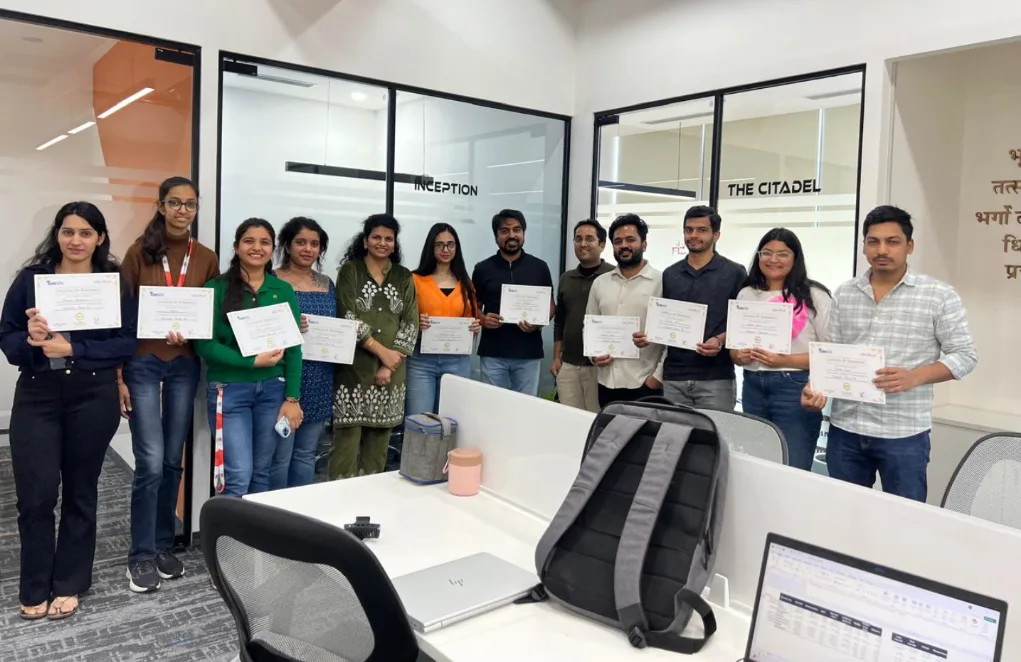
With the fast-growing world of AI, our certification proves that you are outstanding to employers. You will get a professional certificate of completion which you can share immediately on Linked In, your resume, your portfolio, and social media.

  • Industry-approved: Our certification will verify your extensive expertise, not just in high level prompt engineering and LLM fine-tuning, but also in autonomous agents, RAG structures, and so on.
  • Assured authenticity: Every certificate comes with an individual, digitally identifiable verification code that enables recruiters across the globe to be able to instantly verify your accomplishments.
  • Significant Career Impact : Our certificate provides you with a direct competitive edge, with the innovative tech industry offering the top jobs.

Generative AI Course Curriculum

Discover our comprehensive Generative AI course in Pune. Get to know the details of LLMs, prompt engineering and ChatGPT. Explore images and video AI with apps such as Midjourney and DALL-E. Build AI agents using LangChain and RAG and fine-tune and deploy models using Hugging Face. The curriculum will prepare you to apply it in the real-world and will provide a flying start to your career in the field of AI.

Module 1: Artificial Intelligence Fundamentals 4 Topics

1.1 The AI Landscape

  • What AI is – and what it is not: AI vs.
    automation vs. analytics
  • Narrow AI, General AI and Super AI, with real examples
  • AI, Machine Learning and Deep Learning: how the three relate

1.2 Core AI Capabilities

  • NLP, computer vision, speech and multimodal AI
  • Predictive analytics: forecasting and
    recommendation systems
  • Where AI already sits in everyday business
    systems

1.3 AI Across Industries

  • HR, operations and supply chain, finance and retail
  • Healthcare, manufacturing and education

1.4 Building an AI Mindset

  • How to spot a genuine AI use case – and a bad one
  • Feasibility: is the data available, repeatable
    and reliable?
  • Where AI predictably fails, and why humans
    stay in the loop
Module 2: Generative AI Foundations & Prompt Engineering 7 Topics

2.1 How Generative AI Works

  • Predictive AI vs. Generative AI; LLMs without the maths
  • Tokens, context windows and why they affect cost
  • Training vs. fine-tuning vs. inference; temperature and top-p

2.2 The Current Model Landscape

  • GPT, Claude, Gemini and Llama: strengths and limitations
  • Reasoning models vs. fast models; open vs. closed weights
  • Choosing a model by task, cost, latency and
    data sensitivity

2.3 Prompt Engineering Fundamentals

  • Anatomy of a prompt: Role, Task, Context, Format, Constraints
  • Generation, summarisation, rewriting and extraction
  • Structured output: JSON, tables, lists and schemas

2.4 Prompt Frameworks

  • RTF (Role-Task-Format) for quick everyday prompts
  • CO-STAR (Context, Objective, Style, Tone, Audience, Response)
  • CRISPE and RACE for repeatable professional prompts
  • TAG (Task-Action-Goal) for process and workflow prompts
  • Building a reusable prompt template library for your role

2.5 Core Prompting Techniques

  • Zero-shot and few-shot prompting
  • Chain of Thought and self-consistency for harder problems
  • Prompt chaining, negative prompting and persona control

2.6 Meta Prompting

  • Using AI to write, critique and improve your prompts
  • Optimisation loops: draft, test, diagnose, refine
  • Generating prompt templates and system prompts automatically
  • Comparing prompt variants and evaluating what performs better
  • Scaling prompts across a team without quality drift

2.7 Limitations & Quality

  • Hallucinations and bias: why they happen and how to spot them
  • Verifying facts and grounding answers in sources
  • When to use AI and when to use human judgement
Module 3: Advanced LLMs, Embeddings & RAG 4 Topics

3.1 Choosing the Right Model

  • LLMs vs. Small Language Models; edge and on-device use
  • Reasoning vs. fast models: cost, latency and quality trade-offs
  • Use-case mapping: which model for which business task

3.2 Embeddings & Semantic Search

  • What embeddings are; representing text as vectors
  • Vector databases and why similarity beats keyword search
  • Chunking strategies and how chunk size changes answer quality

3.3 RAG in Practice

  • RAG end to end: ingest, chunk, embed, retrieve, generate
  • Building a knowledge base from documents, wikis and tickets
  • Improving retrieval: metadata filters, hybrid search, re-ranking
  • Grounding answers with citations; common failure modes

3.4 Customisation & Tool Use

  • Prompting vs. RAG vs. fine-tuning: choosing the right lever
  • Function calling and structured JSON output
  • Model Context Protocol (MCP): connecting models to tools and data

4.1 What Agentic AI is

  • Autonomy, goal-directedness and adaptability
  • Chatbots vs. workflows vs. agents – a clear comparison
  • Real examples: research, support and coding agents

4.2 Anatomy of an Agent

  • Memory, planning, tool use and reflection
  • Levels of autonomy and where to set the limit

4.3 Agent Design Patterns

  • ReAct and plan-and-execute for multi-step tasks
  • Router and multi-agent supervisor patterns
  • Human-in-the-loop checkpoints and approval gates

4.4 Frameworks, Guardrails & Reliability

  • LangChain and LangGraph, CrewAI, AutoGen, Agent SDKs
  • Error handling, retries and fallback strategies’
  • Guardrails, cost control and monitoring agent performance

5.1 Zapier

  • Platform overview and interface
  • Building your first Zap; multi-step workflows
  • AI-powered steps, filters, formatters and utilities
  • Hands-on: automate an email-to-task
    workflow

5.2 Make.com

  • Visual workflow builder: modules, routes and scenarios
  • Advanced routing and error handling
  • Data stores, aggregators, scheduling and webhooks
  • Hands-on: build a content aggregation workflow

5.3 LangFlow

  • What LangFlow is: a visual builder for LLM apps and AI agents
  • Interface tour: canvas, components, flows and the playground
  • Core components: model, prompt, memory, chain, agent, tool nodes
  • Connecting OpenAI, Claude and Gemini; managing API keys
  • Data components: file loaders, splitters, embeddings, vector stores
  • Building a RAG chatbot flow step by step
  • Turning a flow into an agent with tools and a system prompt
  • Custom components and Python code nodes for advanced logic
  • Testing, debugging and tracing a flow’s execution
  • Publishing a flow as an API endpoint and embedding it in an app
  • Environment variables, credentials, versioning and sharing
  • Hands-on: build and deploy a document
    Q&A assistant

5.4 Lovable & Vibe Coding

  • What vibe coding is: building software by describing it
  • Lovable overview: projects, chat interface and live preview
  • Prompting for apps: describing screens, data and behaviour
  • Building your first app: pages, components and navigation
  • Styling and branding: themes, layout and responsive design
  • Adding a backend with Supabase: tables, records and queries
  • User accounts and authentication
  • Iterating safely: chat edits, visual edits, undo and version history
  • Connecting APIs and third-party integrations
  • Publishing: preview links, custom domains and hosting
  • GitHub sync and exporting your code
  • Knowing the limits: when to hand off to a developer
  • Hands-on: build and publish a working internal business tool

5.5 Notion AI

  • AI writing, editing and database automation
  • Q&A over workspace knowledge
  • Hands-on: build an AI-powered internal knowledge base

5.6 Canva AI

  • Text-to-design generation and AI brand kits
  • Magic Studio tools: resize, erase, edit, content suggestions
  • Hands-on: create a branded presentation with AI

5.7 Choosing your stack

  • Matching the tool to the task: automation vs. agent vs. app
  • Comparing cost, learning curve and ceiling
    • Security, data residency and what not to paste
    into a tool
    • Avoiding vendor lock-in

5.8 Integrating AI into business Processes

  • Identifying automation opportunities in your own role
  • Workflow mapping and optimisation
  • Change management and team adoption
  • Measuring ROI of automation

6.1 n8n Fundamentals

  • Cloud vs. self-hosted n8n: which to choose and why
  • The canvas, nodes, connections, and executions
  • How data flows between nodes; reading the JSON view

6.2 Core Nodes & Logic

  • Trigger nodes: schedule, webhook, chat and app events
  • HTTP Request node for connecting to any API
  • IF, Switch, Merge, Set, Loop and Wait nodes
  • Expressions and variables for dynamic workflows

6.3 Credentials & Integrations

  • Connecting Google Workspace, Slack, Sheets, Notion, CRMs
  • Managing API keys and credentials securely
  • Working with webhooks from external systems

6.4 AI Nodes in n8n

  • The AI Agent node vs. a simple LLM call
  • Chat model nodes: OpenAI, Claude, Gemini and local models
  • Memory nodes for conversational context
  • Tool nodes: search, calculator, HTTP and workflow tools
  • Vector store and embedding nodes

6.5 Building your first AI Agent

  • Defining the agent’s goal, scope and tools
  • Writing the system prompt and setting guardrails
  • Adding memory and testing in the chat interface
  • Iterating on failures and edge cases

6.6 RAG Inside n8n

  • Ingesting documents from Drive, SharePoint or upload
  • Chunking, embedding and storing in a vector database
  • Wiring retrieval in as a tool the agent can call
  • Keeping the knowledge base fresh on a schedule

6.7 Multi-Agent & Sub-Workflows

  • Splitting complex jobs across sub-workflows
  • Routing between specialist agents
  • Adding human approval steps before an agent acts
  • Hands-on: a support agent answering from a company knowledge base
  • Hands-on: a lead-qualification agent that writes to a CRM
  • Hands-on: a daily research digest agent that emails a brief


7.1 The Copilot Landscape

  • Microsoft 365 Copilot vs. Copilot Chat vs. GitHub Copilot
  • Licensing basics and what each tier includes
  • Where your data goes: the tenant boundary explained simply

7.2 How Copilot Works

  • Grounding in Microsoft Graph: files, mail, chats, and meetings
  • How permissions decide what Copilot can see
  • Why Copilot answers differ from public
    ChatGPT answers

7.3 Copilot in Word

  • Drafting from a prompt, a file or a set of notes
  • Rewriting for tone, length and audience
  • Summarising long documents and generating tables

7.4 Copilot in Excel

  • Generating and explaining formulas
  • Analysing a table: trends, outliers and breakdowns
  • Creating charts and PivotTables by description
  • Data cleaning and column transformation prompts

7.5 Copilot in PowerPoint

  • Generating a deck from a Word document or a prompt
  • Restyling and reorganising existing slides
  • Generating speaker notes and summarising a deck

7.6 Copilot in Outlook

  • Summarising long threads and extracting decisions
  • Drafting and refining replies; coaching on tone
  • Meeting preparation briefs

7.7 Copilot in Teams

  • Meeting recaps, action items and decision logs
  • Catching up on missed chats and channels
  • Using Copilot during a live meeting

7.8 Prompting Copilot Effectively

  • Referencing files, people and meetings inside a prompt
  • Prompt patterns that work in a Microsoft 365 context
  • Using the Prompt Gallery and building a team prompt library

7.9 Governance & Adoption

  • Sensitivity labels, data protection and admin controls
  • Common oversharing risks and how to avoid them
  • Driving adoption: use cases by department
  • Hands-on: build a prompt library and adoption plan for your team

8.1 The Claude Model Family

  • Opus, Sonnet and Haiku: capability, speed and cost
  • Extended thinking and when deeper reasoning pays off
  • Choosing the right Claude model for a given task

8.2 Claude Interface Essentials

  • Projects: giving Claude persistent context for ongoing work
  • Project knowledge, custom instructions and styles
  • Managing long conversations effectively

8.3 Working with Long Context

  • Analysing large documents, contracts and reports
  • Comparing multiple documents in a single pass
  • Synthesis and structured extraction tasks

8.4 Artifcats

  • Generating documents, dashboards and mini-apps in chat
  • Iterating on an artifact through conversation
  • Business uses: trackers, calculators, one-pagers

8.5 Claude – Code Overview

  • Agentic coding from the terminal, IDE or desktop
  • Repository-aware tasks and multi-file changes
  • Where it fits for non-developers: scripts, automation, data tasks

8.6 Connectors & MCP

  • Model Context Protocol in practice
  • Connecting Claude to Drive, calendar, email and internal tools
  • Workflows that read from and write to business systems
  • Permissions and safe connector use

8.7 Prompting Claude Well

  • Using XML tags to structure complex prompts
  • Role framing, examples and explicit output formats
  • Encouraging step-by-step reasoning; controlling verbosity
  • How Claude prompting differs from GPT prompting

8.8 Claude in Business Workflows

  • Research, analysis, drafting and document review
  • Building a repeatable assistant for a business function
  • Data handling, confidentiality and safe use
    policies
  • Hands-on: build a Claude Project with connected data sources

9.1 The Visual Gen AI Landscape

  • Image models, video models and avatar platforms
  • Quality, speed and cost trade-offs across the field
  • Choosing a tool for marketing, training or product work

9.2 AI Image Generation

  • Google Nano Banana and Nano Banana Pro (Gemini image models)
  • ChatGPT image generation; Midjourney; Stable Diffusion
  • Strengths compared: photorealism, text-in image, speed, control
  • Resolution, aspect ratios and output formats

9.3 Prompting for Images

  • Prompt anatomy: subject, style, composition, lighting, camera
  • Negative prompts and constraint control
  • Reference images and style transfer
  • Getting readable text inside an image

9.4 Editing & Brand Consistency

  • Inpainting, outpainting and background replacement
  • Multi-reference fusion and pose control
  • Keeping a character, product or brand look consistent
  • Building a reusable brand prompt kit

9.5 AI Video Generation

  • Google Veo: text-to-video and image-to video with native audio
  • Gemini Omni Flash for fast conversational video editing
  • Kling and Runway as alternative production tools
  • Practical limits: clip length, continuity and cost

9.6 Prompting for Video

  • Shot description, camera movement and pacing
  • Image-to-video: starting from a generated still
  • Maintaining continuity across multiple shots
  • Storyboarding an AI video before you generate

9.7 AI Avatars & Talking – Head Video

  • Avatar platforms: HeyGen and Synthesia
  • Creating a custom or stock avatar; multilingual delivery
  • AI voice with ElevenLabs: cloning, tone and pacing
  • Script to avatar to voice to captions: the full pipeline
  • Hands-on: a branded image campaign set with one visual identity
  • Hands-on: a 60-second avatar-led explainer with voice and captions

10.1 The Real Risks

  • Hallucinations and factual failure
  • Bias in training data, algorithms and human feedback
  • Privacy, data leakage and prompt injection
  • Deepfakes, misinformation and synthetic media

10.2 Responsible AI Principles

  • Fairness, accountability, transparency and explainability
  • Privacy, safety and human control

10.3 Frameworks at a glance

  • OECD AI Principles and NITI Aayog #AIForAll (India)
  • UNESCO AI Ethics, the EU AI Act, MicrosoftnResponsible AI

10.4 Safe Usage in Practice

  • Verifying outputs and cross-checking sources
  • Human-in-the-loop: when oversight is mandatory
  • Guardrails: input validation, output moderation, action limits
  • Secure handling of company and customer data

10.5 Lessons & Culture

  • Short case studies of AI failures and what they teach
  • Individual and organisational accountability
  • Building responsible AI habits into daily work

Trends to Watch

  • Multimodal and on-device AI
  • AI coding assistants: GitHub Copilot, Cursor,
    Claude Code
  • The MCP and agent-tooling ecosystem
  • What the Indian job market is hiring for in AI right now

Industry Ready Data Analyst Projects

icon
Designed by Industry Experts
icon
Get Real-World Experience
Market Basket Analysis for Retail Optimization

This project analysis customer purchase behaviour. You will work upon rule mining techniques and algorithms to identify co-occurring items. Retailers can optimize product placement, inventory management and promotions to increase selling opportunities, enhance customer satisfaction and maximise revenue.

Sentiment Analysis for Social Media Monitoring

This project uses techniques to analyse sentiments in social media posts, online discussions and customer reviews by classifying text data as positive, negative, neutral. It greatly helps businesses to examine public sentiments, emerging trends and make data driven decision making.

clock-icon
80+
Hours of content
video
20+
Live sessions
hammer
7+
Tools and software

Generative AI Skills you can add in your CV

Generative AI Tools Covered

What Sets This Program Apart?

GyanSetu
Other Courses
all-in-one Complete Toolkit

✔ LLM fundamentals & Gen AI models
✔ Transformers & Diffusion models
✔ Toolkits for app building (APIs, Agents)
✔ Deployment & scaling

✘ Only basic AI theory
✘ Limited tooling exposure

progress-icon Beginner to Pro Roadmap

✔ Starts from fundamentals → advanced Gen AI solutions

✘ No structured progression

empowered AI-Powered Learning

✔ Built-in AI learning + Gen AI tools and projects

✘ No AI tools covered

focused Career Specialization

✔ AI Engineer
✔ GenAI Developer
✔ Prompt Engineering Specialist

✘ Only general AI overview

exposure Real Industry Projects

✔ Chatbots
✔ Autonomous agents
✔ Deployable AI apps

✘ Only demos / sample projects

mentorship Industry Mentors

✔ Mentors with real AI engineering experience

✘ Generic instructors

practice Career Support

✔ Resume building
✔ Mock interviews
✔ Placement assistance

✘ No structured job support

course in gurgaon
Who is this course for?
  • Students and Recent Graduates
  • Working Professionals
  • Career Changers
  • IT Professionals
  • Educators and Academic Researchers
  • Entrepreneurs and Business Owners

Career Assistance for Generative AI Course

briefcase
Job Opportunities Guaranteed

Get a 100% Guaranteed Interview Opportunities Post Completion of the training.

lock
Access to Job Application & Alumni Network

Get chance to connect with Hiring partners from top startups and product-based companies.

Mock Interview Session

Get One-On-One Mock Interview Session with our Experts. They will provide continuous feedback and improvement plan until you get a job in industry.

Live Interactive Sessions

Live interactive sessions with industry experts to gain knowledge on the skills expected by companies. Solve practice sheets on interview questions to help crack interviews.

lock
Career Oriented Sessions

Personalized career focused sessions to guide on current interview trends, personality development, soft skill and HR related questions.

briefcase
Resume & Naukri Profile Building

Get help in creating resume & Naukri Profile from our placement team and learn how to grab attention of HR’s for shortlisting your profile.

Top Companies Hiring for Generative AI Role

Honours & Awards Recognition

Denso International
Denso International
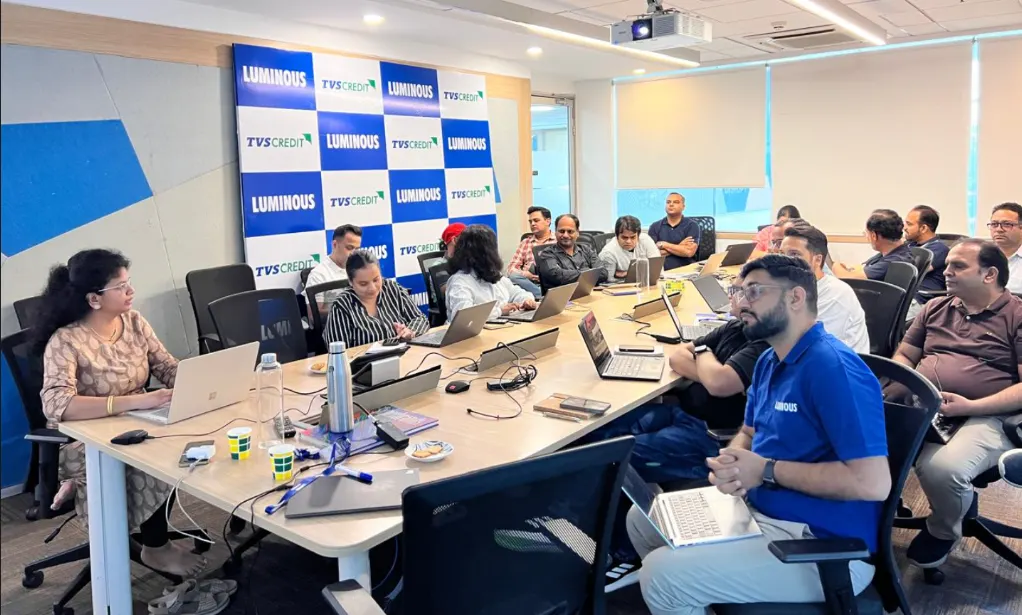
Luminous
Luminous
Bharat Petroleum
Bharat Petroleum
Toshiba Midea
Toshiba Midea
BryAir
BryAir
Awarded by GD Goenka University
GD Goenka University
Gyansetu conducted Power BI training for Livpure employees
Livpure
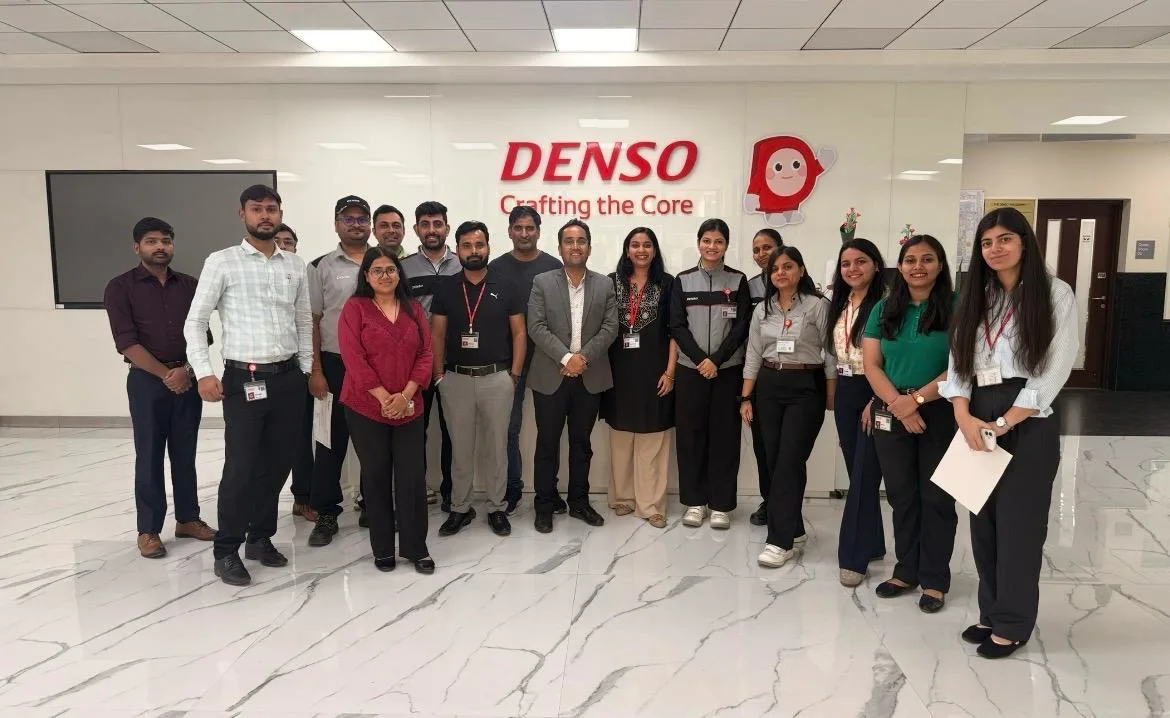
Gyansetu conducted Advanced Excel training for Denso International Employees
Denso International
Gyansetu conducted Full Stack Development training for ReverseLogix employees
ReverseLogix
Gyansetu conducted Advanced Java training for BML Munjal University students
BML Munjal University
Delivering Training To Wedapt
Wedapt
Gyansetu conducted workshop on Cloud Computing and Data Analytics for Manav Rachna University students
Manav Rachna University
Gyansetu conducted Java workshop for GLA University students
GLA University
Gyansetu conducted Data Analytics Workshop for DPGITM students
DPGITM
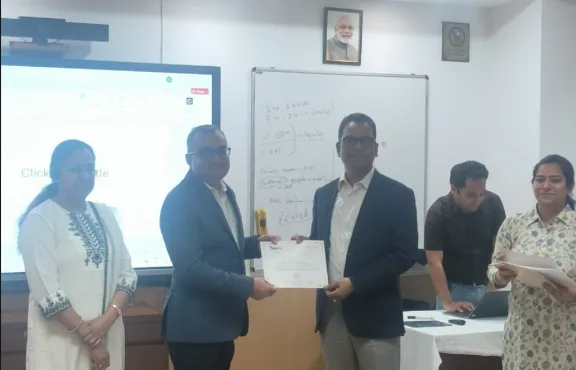
Certificate Issued to Gyansetu by GD Goenka University
GD Goenka University

FOR QUERIES, FEEDBACK OR ASSISTANCE

Contact Gyansetu Learner Support

Our Learners Testimonials

Sanskriti
Generative AI Engineer
I joined this course because I wanted to learn how tools like ChatGPT actually work beyond just using them. The hands-on projects and practical assignments helped me understand prompt engineering, LLMs, and AI workflows in a very simple way. It was worth every session.
Urvashi
AI Solutions Intern
The best part of this course was how practical it was. Instead of only learning concepts, we built real AI applications using the latest Generative AI tools. It gave me the confidence to start building my own projects.
Yogesh Yadav
Prompt Engineer
I used to spend hours figuring out AI tools on my own. 😄 This course saved me so much time by giving me a clear learning path. Now I know how to write effective prompts, automate tasks, and use AI much more efficiently.
Saurabh
Generative AI Consultant
What I appreciated most was that the course stayed updated with the latest AI trends and tools. We didn't just learn the theory—we actually applied it through hands-on projects and case studies. By the end of the program, I felt confident enough to use Generative AI professionally and recommend it to others.
Harshit
AI Automation Specialist
The projects were my favorite part of the course because they felt like real business challenges. Learning how to integrate Generative AI into workflows opened up so many new possibilities. The guidance from the mentors kept me motivated throughout.
Monika
Digital Marketing Executive
I enrolled to learn how AI could improve my work, and it exceeded my expectations. From content creation to workflow automation, I discovered practical ways to use Generative AI every day. It's one of the most useful upskilling courses I've taken.
Sanju Kanwar
Content Strategist
As someone from a non-technical background, I wasn't sure if I could understand Generative AI. The course was beginner-friendly, and every topic was explained with real-world examples. Shalki Ma'am made even advanced concepts feel approachable.
self assessment
Self Assessment Test

Learn, Grow & Test your skill with Online Assessment Exam to achieve your Certification Goals.

FAQs: Generative AI Course in Pune

Q1: How long does the Generative AI course in Pune take?

Generative AI course in Pune, which has highly variable choices that will suit your time-table to the utmost level. You have the option to complete the comprehensive training in 2 months by attending classes during weekdays, in 3 months by attending classes at the weekends or you can fast-track by an intensive 30 day programme. Each of the tracks will provide you with skills such as prompt engineering, LLM fine-tuning, RAG pipelines, and many others.

Q2: Do I need programming experience to start this AI training course?

Absolutely not. We are also beginning generative AI courses in Pune, where we have special courses offered to beginners with no technical skill requirements. We would start by teaching you about some of the basics before we move into other higher order concepts of autonomous AI agents, image generation, and complex model integrations. This is because our curriculum will lead you to become an expert step by step, providing many practical examples and abundant guidance.

Q3: Is there a specific programme for experienced IT professionals?

Certainly. Pune Our software engineer course in Pune is a specialized generative AI course designed to allow tech professionals to enlarge their skillset. You will immediately get into more advanced deployments, such as API integrations, sophisticated RAG structures, LLM fine-tuning using Hugging Face, and enterprise-level deployment plans. We can provide you with unprecedented code optimisation and AI automation, as well as innumerable other high-tech methodologies that can be applied instantly to your sphere of expertise.

On complete passing, you will be given the finest AI course in Pune with a certificate, a worldwide recognised certificate of your comprehensive understanding of AI. This high-profile certificate will confirm your expertise in a broad spectrum of technologies, such as LangChain, ChatGPT applications, vector databases, and many others. It is ideal to share on LinkedIn, your resume, and your portfolio, which would give you an instant, significant edge over the best employers.

You will have practical access to an unbelievable limitless scope of the best AI tools. You will learn the important platforms in our generative AI training in Pune, including ChatGPT, Claude, Midjourney, Stable Diffusion, LangChain, Hugging Face, Pinecone, and a multitude of other sophisticated systems. You will never be restricted to the fundamentals, we will take you through simple prompt interfaces to elaborate cloud based AI systems and large multi-agent systems.

Yes, the demand in Pune is soaring at present. The tech companies and startups in the area are in dire need of talent. Having completed our course, you will be eligible for incredible positions, both in Prompt Engineer and AI Developer and various other innovative roles of LLM Architect, AI Product Manager, and several more. We also offer the full gamut of career assistance, such as specialized interview training and special access to major tech firms in the market.

We are the best with the most competitive and transparent rates in Pune. Precise cost varies according to the study track that has been selected (2 months weekdays, 3 months weekends or the fast-track 30 days). At Gyansetu, we do not compromise on the value; your investment will come with a lifetime access to our vast learning content, live projects, certification, lifetime career support, and many other single-handedly exclusive goodies.

Traditional Machine Learning mainly deals with the analysis of data and prediction of trends. Generative AI goes well beyond that, as it can actually produce new and original content, such as text, images, code, video, and so on. During our training, you will be taught precisely how to train, optimise and deploy these ground-breaking generative models to solve complex business problems, whether through automated customer service or more sophisticated data analysis.

Absolutely! We do everything in Gyansetu based on practical experience. Your impressive, vast portfolio will include projects like intelligent customer service chatbots, advanced CV screening systems, automated content generators of marketing information, complex document-question-answer applications and so on. The technologies involved in these projects are OpenAI APIs, LangChain, and vector databases, as well as many other enterprise tools, which means that you are just ready to take on any professional task.

You can take our Generative AI course in Pune, which is based on flexible learning, to satisfy your needs in the most possible way. You may select an interactive classroom work in our state-of-art campus, smooth live online courses, or a hybrid format. Whichever the method of learning, you will receive complete and unlimited access to all course materials, live project support, comprehensive mentoring, access to high-end AI tools, and so on.

Without a doubt. The most rapidly expanding technological revolution in this decade is generative AI. By intervening at this time, you are placing yourself in the position of a market with an enormous shortage of specialists. Not only do our students receive huge wage growth, but they also find a range of career opportunities including specialised AI developers and strategic innovation leaders in any of the areas of health care, finance, marketing, e-commerce, and so forth.

In Gyansetu, you will only be taught by the absolute best of industry professionals. Our teachers are experienced professionals with years of practical expertise in the top technology companies and have a deep understanding of LLMs, RAG systems, autonomous AI, and a myriad of other inventions. They not just exchange theoretical knowledge, but, what is most important, priceless practical experience, the secrets of best practices, up-to-date use-cases, and much, much more you will never come across elsewhere.

Yes, absolutely! Besides our technical modules, we also have some holistic business application tracks. You will get to know how to masterfully engage in prompt engineering, automate a workflow, create content, and a thousand other skills that enable you to bring immediate value to the table without necessarily writing a line of code. In marketing, HR, sales, or management, we will explain to you how to utilize AI to multiply your productivity by enormous percentages and realize so much more.

Our curriculum is very extensive and constantly updated to the most recent AI developments. Where others end at the fundamentals we extend to the extremes. You are going to explore deep into the material of LangChain applications, sophisticated strategies of retrieval of vectors, ethical principles of work with AI, the creation of multimodal models, etc. We just present the best comprehensive training of generative AI in Pune so that you never have an absolute knowledge advantage over the competition.

At Gyansetu, we are not just going to cut off on the day you graduate. We have a lifelong support programme. You will enjoy special networking, access to updated course content, vibrant alumni organizations, limitless review of your portfolio, among others. Moreover, our placement professionals are very pro-active in terms of job applications and salary discussions, and this is the reason why you will find it so easy to land a high profile position in the AI industry.

frequently asked questions by students for courses
Drop us a Query
+91-9999201478

Available 24x7 for your queries

Please enable JavaScript in your browser to complete this form.
Categories